
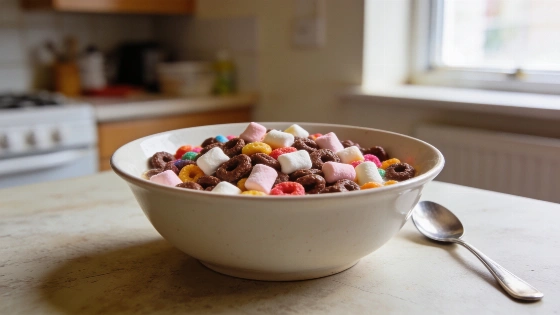
No nutrition panels accompany the supplied list of 31 cereals. It puts Chocolate Marshmallow Mateys at number one for sugar, but the available research does not confirm that ranking or give an official sugar figure for the cereal. The figures are absent. Without comparable labels, the countdown cannot show the gap in sugar between products.
A rank is not a measurement of sugar in a serving. Check the serving size and sugar amount on the pack. Per-100 g figures also help when comparing products. The FDA's added-sugars label guidance explains how added sugars appear on the U.S. Nutrition Facts label. UK cereal packaging may use different label conventions.
The countdown provides ranks, not verified grams of sugar per serving or per 100 g. Without those label metrics, it cannot establish the absolute difference between cereals or how much a bowl contributes to a daily limit.
The countdown's cereal rankings
At number 31 is Shreddies. Next come Crispix, Weetabix with Chocolate, Oaties Choco Crunch, Kellogg's Frosted Mini-Wheats, Weet-Bix Wild Berry Bites, Honey Monster Wheat Puffs, Shreddies The Coco One, Nesquik chocolate cereal, Honey Cheerios, Kellogg's Just Right Original, Nutri-Grain, KitKat Cereal, Milo and Trix.
The higher-ranked cereals include Special K Red Berries, Reese's Puffs, Cinnamon Toast Crunch, Froot Loops, Honey Nut Cheerios, Lucky Charms, Fruity Pebbles, Cookie Crisp, Crunchy Nut Cornflakes, Frosted Flakes, Krave Chocolate, Oreo Puffs, Chips Ahoy Cereal and Cocoa Krispies. Chocolate Marshmallow Mateys is listed at number one.
Claims Check: A countdown is a screening tool, not a nutrition measurement or a health assessment. Check the current package for serving size and sugar values, and do not assume that a product's position in a ranking proves how much free sugar one bowl contains.
What the ranking can and cannot tell shoppers
The original article identifies Angela Dowden as a nutritionist and discusses differences in fibre and added vitamins and minerals. But it gives no amounts for those nutrients. That means shoppers cannot use the material to compare the cereals on those measures. For branded products, the current pack is the practical reference. USDA FoodData Central offers broader food-composition data, but its entries are not a substitute for the manufacturer's current label.
Total sugars and free sugars are not the same thing. The World Health Organization defines free sugars as sugars added to foods and drinks, plus sugars naturally present in honey, syrups and fruit juice. It does not include sugars naturally found in whole fruit, vegetables and milk. A nutrition panel's total-sugars figure is not automatically a free-sugars figure.
The UK NHS sets daily free-sugar limits at 19 g for children aged 4-6, 24 g for children aged 7-10, and 30 g for adults and children aged 11 and over. The WHO recommends keeping free sugars below 10% of daily energy. A reduction to below 5% may offer further benefits. On a 2,000-calorie diet, 10% is about 50 g of sugar. The UK Scientific Advisory Committee on Nutrition recommends a stricter limit: no more than 5% of daily energy for adults and children over two.
These are daily guidelines, not a verdict on one cereal or bowl. Portion size matters. A serving poured at home may be larger than the amount shown on the package. Milk or toppings also change the meal's overall nutrition. For a clearer comparison, check the serving weight, sugar per serving and per 100 g, fibre, and ingredients. The same label-first approach applies to nutrition shakes and powders. Check serving size, added sugars, protein amount and ingredient transparency rather than relying on a front-of-pack claim or ranking.
Use the countdown as a prompt to check the current pack, not as a substitute for its nutrition information. Without serving-level figures and a clear distinction between total and free sugars, the ranking cannot show how much of a daily limit a particular bowl contributes.