
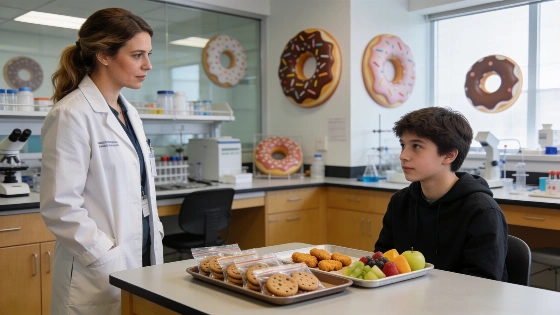
Walk into Alex DiFeliceantonio's lab and you'll spot doughnuts everywhere-on rugs, on the walls, even as stress balls. But the real focus isn't the décor. DiFeliceantonio wants to know why ultra-processed foods have such a grip on us, and what they're doing to our bodies and brains.
DiFeliceantonio, a neuroscientist at Virginia Tech's Fralin Biomedical Research Institute, studies what drives our cravings. She pays volunteers to eat and drink for science, tracking how their bodies and brains react to everything from cookies to chicken nuggets. Her main interest is ultra-processed foods (UPFs)-the packaged snacks, sodas, and ready-to-eat meals that now make up more than 70% of foods sold in U.S. grocery stores, according to recent regulatory reviews and market analyses.
Ultra-processed foods account for over 70% of products in U.S. grocery stores, highlighting the importance of scrutinizing ingredient lists, protein ratios, and added sugars on Supplement Facts panels.
Unlike whole foods like fruits, vegetables, beans, and whole grains, UPFs are designed for convenience, taste, and shelf life. They're often made with a mix of additives, preservatives, and sweeteners-everything from sucralose and stevia to sugar alcohols and synthetic thickeners. These ingredients can improve texture or flavor, but they also make it harder to judge a product's real nutritional value. For anyone comparing protein powders or meal replacements, it's worth looking past the front label and checking the actual protein-to-calorie ratio, serving size, and whether there are added sugars or proprietary blends.
DiFeliceantonio's lab, known as DONNUT (DiFeliceantonio Neuropsychology of Nutrition), is built around the idea that these foods can hijack our natural appetite systems. She suspects that eating more UPFs may actually change the brain, in ways that aren't so different from addictive drugs. This is especially relevant for nutrition shakes and functional drink mixes, where sweeteners, flavor enhancers, and emulsifiers can keep people coming back, sometimes at the expense of feeling full or supporting metabolic health.
Claims Check: Many nutrition shakes and meal replacements market themselves as 'clean' or 'gut healthy,' but regulatory authorities such as the FDA require that any health-related claims be substantiated by clinical evidence and transparent ingredient disclosure. Consumers should verify that protein content, sweetener type, and fiber sources are clearly listed and supported by peer-reviewed studies, not just marketing language.
Inside the DONNUT Lab, the studies are as varied as the foods themselves. In one experiment, participants look at photos of UPFs and unprocessed foods while their brain activity is scanned. Another study compares how the body responds to drinks with sugar, artificial sweeteners, or both, measuring glucose and key metabolic hormones. A third project tests whether the nutrients in what we eat actually drive our food choices, with participants taste-testing different sugar and flavor combinations over two weeks, then coming back for more brain scans and feedback.
One recent study stands out: participants-many of them teenagers-ate only UPFs for a period, then switched to a diet of minimally processed foods, or the other way around. Lunch on the UPF diet might be deli meat and ultra-processed American cheese on packaged bread; the minimally processed version could be a whole chicken breast on homemade bread with natural cheddar. Snacks ranged from packaged cookies and crackers to fresh fruit and natural cheese. DiFeliceantonio is especially interested in how young people's brains respond, since adolescence may be a "sensitive period" when eating habits can have lasting effects.
One of the most troubling findings from DiFeliceantonio's work is how little we know about what's really in our food. She points out that when certain fibers are combined with citric acid over time, fructose can be produced-yet U.S. labeling laws don't require this newly formed fructose to be listed, since it wasn't an original ingredient. This lack of transparency leaves consumers in the dark about potential risks and nutritional trade-offs. The U.S. Department of Health and Human Services (HHS) and USDA have recently started reviewing GRAS (Generally Recognized as Safe) ingredient rules and are working on the first federal definition of UPF, which could shape future FDA guidance and labeling standards. For now, though, these changes are still under review and not yet required.
Other countries are moving faster. In India, for example, the Supreme Court is considering mandatory front-of-pack warning labels for foods high in sugar, salt, or fat, with proposed thresholds for added sugars and fats that would trigger a red hexagon warning. These kinds of regulations show a growing recognition that clear labels and nutrient thresholds are important for consumer protection.
DiFeliceantonio's research doesn't stop at the lab. She knows that not everyone can easily choose minimally processed foods. "If you're asking a single mom in a food desert who works multiple jobs to feed her child minimally processed foods, where is she going to get that from?" she asks. Her goal is to produce solid data that can drive real changes in the food supply-making healthier options available and realistic for everyone, not just those with more resources.
Ultra-processed foods aren't just a personal issue-they're a systemic one. The science is still catching up to the scale of the problem, but DiFeliceantonio's work makes one thing clear: understanding how these foods affect our brains and bodies is essential if we want to make better choices and push for a food system that supports real health. Until labeling laws change and healthier options become more common, consumers are left to navigate a market where convenience often wins out over nutrition.