
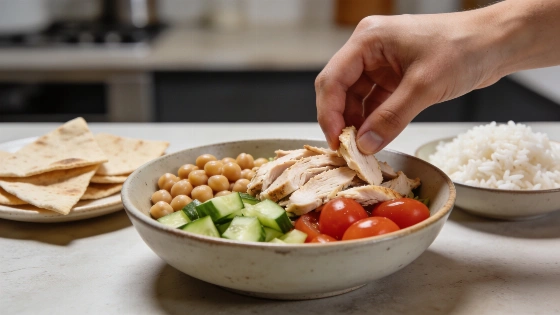
After hours of driving and grocery shopping, I want dinner on the table before it becomes another project. I chop a few ingredients, open the packages and set out the toppings.
For a useful package-to-package comparison, check the serving size first, then compare protein and sodium per serving and read the ingredient and allergen statements. Without measured portions and the package panels, a bowl's protein or calorie total can't be stated reliably.
Build the bowl from ready-to-eat staples
The shortcut starts with fully cooked grilled chili-lime chicken breast. It is sliced and seasoned with chili powder, paprika, garlic, cumin and lime. I usually serve it cold. When we want it warm, I give it a brief turn in the microwave or air fryer. Follow the package directions, and keep refrigerated foods cold until serving. The USDA refrigeration guidance covers safe storage basics.
For vegetables, I sometimes use Trader Joe's Mediterranean-style salad kit. It has romaine, shredded broccoli stalks, radicchio and an herby red-wine vinaigrette. Recent food-safety notices are a reason to check the exact product and lot. They do not mean every fresh ingredient or item from the same retailer is affected. In early October 2026, reports on an expanded frozen-berry recall named Trader Joe's Organic Mixed Berry Blend, 12 ounces, lot code 6 051 01. Affected berry products had best-by dates from January through June 2028. The notice advised consumers not to eat affected products and to discard them or return them for a refund. The alert concerned specified frozen berry products, not the salad ingredients in this bowl.
Claims Check: A recall is product- and lot-specific; it does not establish that unrelated foods from the same retailer are unsafe. For the reported frozen-berry alert, check the product name, package size and lot code, and follow the notice's instruction not to eat affected packages.
That is the foundation. Pita chips add crunch. Warm Indian-style flatbread or microwavable brown rice makes the bowl more filling. For make-ahead ideas beyond dinner, see these Mediterranean breakfast ideas.
Let everyone finish their own
Set out the chicken, chickpeas, vegetables and whichever side sounds good. I usually start with rice and chickpeas, then add chicken and plenty of vegetables. A spoonful of chickpea oil, crushed pita chips or a squeeze of lemon can finish the bowl.
Hummus or tzatziki adds creaminess. Feta, olives or peperoncini bring a salty, tangy note. Garlic spread and hot sauce are also regulars at our table. Sodium can add up across packaged ingredients, so check the Nutrition Facts panels and serving sizes on the chicken, chickpeas, sauces and crunchy toppings. The FDA explains how to read the Nutrition Facts label, including serving size and nutrients such as sodium and protein.
Package claims are no substitute for the numbers and ingredient list. Compare protein per serving rather than assuming a "protein" callout tells you how much a portion provides. Check added sugars where relevant. Review allergen statements for dairy, soy, wheat and other ingredients that may matter to your household. The same label-first approach works for shakes and powders: serving size, protein source and disclosed amounts matter more than broad phrases such as "clean" or "energy."
If Trader Joe's isn't nearby, rotisserie chicken can replace the chili-lime chicken. For a close chickpea substitute, season plain canned chickpeas with lemon juice, olive oil, cumin and salt. Sturdy greens or other chopped vegetables work as the base. For a vegetarian bowl, leave out the chicken and use more chickpeas.
This dinner asks little of a tired cook and still lets everyone choose what goes on their plate. A few ready-to-eat staples and a little chopping are enough to get the family eating together, without making a separate meal for each person. A quick label check makes the convenience easier to assess.