
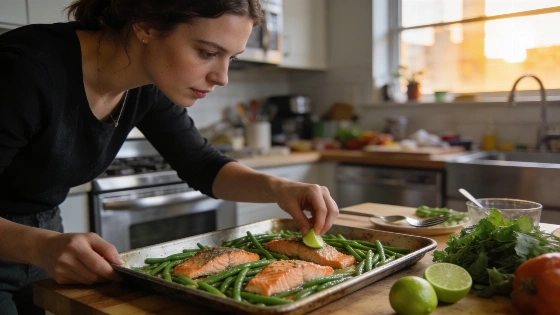
Home cooks are finding that a single sheet pan can be the start of a more sustainable kitchen. Maple and miso sheet-pan salmon with green beans, a recipe from Colu Henry, has become a go-to for people who want fast meals that also make a difference. The prep is simple: chop some cilantro, slice a lime, and you are ready to cook. The whole dish takes about 20 minutes. It fits right into a busy weeknight.
But this is about more than just saving time. Picking seafood with care is now seen as a real way to help the environment. During Climate Week in New York, talk has moved from big policy ideas to what actually ends up on our plates. Even small choices-like which fish or shellfish to buy-can shape food systems and affect the planet.
A typical 4-ounce (113g) serving of wild salmon delivers 23g protein with less than 2g saturated fat, making it one of the highest protein-to-calorie ratios among animal proteins.
Why sustainable seafood matters
Years of reporting on kelp, oysters, scallops, salmon, and shrimp point to one thing: what you put in your cart matters. Cooking at home, learning where seafood comes from, and sharing meals can all help the environment. If you want to make a difference without giving up taste or nutrition, sustainable seafood is a clear choice.
NOAA FishWatch has new updates showing that U.S. shoppers can use government tools to find seafood that is responsibly sourced. These tools help people read eco-labels and pick the right products at the store. This fits with a bigger policy shift: in September 2026, the White House told NOAA to review federal fishery rules under the Magnuson-Stevens Act. The goal is to update data systems and speed up rule changes for both wild and farmed seafood. These steps are meant to cut red tape and make sure that claims about sustainability on packaging are backed by real, current science.
Claims Check: The FDA prohibits seafood brands from making unsubstantiated health or environmental claims on packaging. Any assertion of 'sustainable' or 'eco-friendly' must be supported by verifiable sourcing data and, where possible, third-party certification. Consumers should look for clear labeling and avoid products relying solely on vague marketing language.
Maple and miso salmon is just one example. There are five more quick seafood recipes-two top-rated cod dishes and a protein-rich mussels with white beans and garlic-that show you do not have to pick between taste and sustainability. You can swap green beans for broccoli in the salmon recipe. Small changes like this help cut waste and keep meals fresh.
How food choices drive bigger change
Sustainable seafood is also getting attention on screen. A new documentary from Jonathan Nastasi and Vivian Sorenson features kelp and Melissa Clark, who cooks roast chicken with crunchy seaweed and potatoes. The film looks at the struggles of small farms and fisheries in a system that often works against them, but it stays hopeful. Wendell Berry says in the trailer, "The future of food is not distinguishable from the future of the land, which is indistinguishable in turn from the future of human care."
If you want to know more about how ingredient quality and variety shape healthy eating, the reported earlier analysis of prepared meals at Whole Foods Market gives more insight into smart shopping.
In the end, choosing sustainable seafood is not just about helping the environment. It is about taking control in your own kitchen. Fast, flexible recipes that use responsibly sourced fish let home cooks enjoy good food and make a real difference. This way, people can match their values to what they eat and see that mindful choices at dinner really do matter.
For more help, the NOAA FishWatch program is a top source for the latest on seafood sustainability. The FDA food labeling guide explains what brands can and cannot say on their packaging.