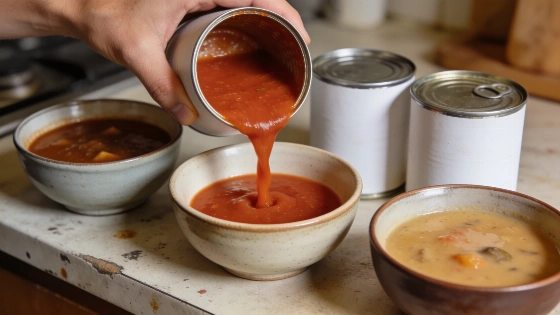
A label can make soup look like an easy weeknight win. The serving-size line can change the math: many canned options are high in sodium while offering little fiber or protein. Four soups made it through a dietitian's nutrition and ingredient review, then passed a family taste test. None suits every meal.
The best choice depends on what you want from the bowl. One tomato bisque has less sodium than many conventional soups; a vegetable soup brings substantial fiber. The chicken noodle soup and chili have different strengths, each with a nutritional trade-off. Compare the Nutrition Facts panel by serving, not just the front-of-package wording, and check how many servings are in the can.
Per cup, the four picks range from 310 to 820 mg of sodium, 1 to 9 g of fiber, and 3 to 9 g of protein. The serving-size line matters: the can may contain more than one serving.
Four picks with different strengths
The trade-off is modest protein and fiber: one cup has 3 grams of protein and 2 grams of fiber. Its 2.5 grams of saturated fat falls below the article's 4-gram shopping benchmark. The 8 grams of added sugar are worth weighing against the rest of the day's food. The ingredient list starts with tomato puree and tomatoes. It also includes water and cream, followed by cane sugar. Onion and black pepper round out the list. "Light in Sodium" is a comparative claim, not a promise that a serving meets the FDA definition of low sodium. The FDA threshold for that claim is 140 mg or less per serving.
Sodium is the drawback: 640 mg per cup, above the article's suggested target. White beans feature in a concise ingredient list, alongside organic vegetables. Herbs and seasonings round it out. The soup comes close to the 10-gram protein target suggested for a main meal, but falls short. That target is a practical comparison point, not a universal standard for an adequate meal.
One cup contains 610 mg of sodium and 7 grams of protein, but only 1 gram of fiber. Saturated fat is less than 0.5 grams per cup. Organic ingredients are a plus, as is the absence of artificial additives and preservatives. With so little fiber in the soup, a vegetable side or whole grain can help round out the meal.
At 820 mg of sodium per cup, this is a high-sodium choice, though it stays below 1,000 mg. Each cup provides 6 grams of fiber and 7 grams of protein, with no saturated fat. Its ingredient list is longer than those of the other picks, but consists mostly of vegetables and beans. Familiar seasonings make up much of the rest; yeast extract and liquid smoke are among the less familiar additions. A longer ingredient list alone does not establish that a food is less nutritious. The amounts and overall formulation matter.
How to read the trade-offs
For sodium, 460 mg is a useful reference point. That amount is 20% of the 2,300 mg Daily Value, which FDA labeling guidance treats as high. The current Dietary Guidelines for Americans advise adults to limit sodium to less than 2,300 mg per day. Recommended limits are lower for children under 14. People following DASH may use a 2,300 mg daily limit or, in some cases, a 1,500 mg target. These are daily benchmarks, so weigh the soup against the rest of the day's meals.
The original review's shopping targets are less than 460 mg sodium and at least 3 grams of fiber. It suggests around 10 grams of protein when soup is the main meal. Those figures can help compare products, but they are not official FDA definitions or a guarantee of a balanced meal. FDA's Nutrition Facts guidance also makes % Daily Value useful for quick comparisons: 5% DV or less is low, while 20% DV or more is high. Check the serving size before comparing numbers, especially when a can contains multiple servings.
Added sugar and saturated fat also need context. U.S. dietary guidance recommends keeping each below 10% of daily calories for people ages two and older. That does not make a soup with added sugar or saturated fat automatically unsuitable. The guidance helps put a per-serving figure alongside the broader pattern of what you eat.
Fiber deserves a closer look than a single number. Shake Nutrition's fiber-label guide explains that total fiber alone does not tell you how much is soluble or establish a cholesterol-lowering effect. For canned soup, compare the serving size and fiber amount, then consider what else is on the plate.
Ingredient lists can help clarify what is in a product. Familiar-sounding ingredients do not by themselves prove a health benefit, and a longer list does not automatically make a soup a poor choice. When sodium is a strict limit, prioritize the Nutrition Facts panel, even if that means accepting less fiber or protein in the soup itself.
A soup mix can offer more control over salt. The original review notes that mixes such as a vegetable option from Bob's Red Mill are typically low in sodium or sodium-free because the cook adds the liquid. Check the package, since sodium varies by product. Added broth or seasonings can change the final amount. Vegetables or protein can be added, too, though the article did not taste-test that mix.
The dietitian researched products online, then checked supermarket shelves at King Soopers and Whole Foods Market. She compared sodium and protein, then checked fiber. Ingredients and saturated fat also figured in her review. She narrowed the field to 11 soups.
She prepared each soup according to the directions on its can. With her family, she rated taste and texture, then noted how filling each bowl felt.