
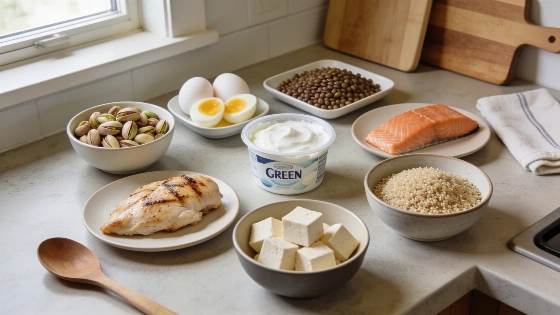
Many people in the U.S. get enough protein, but often from the same few foods. This means they miss out on the range of nutrients that different protein sources can offer. Choosing a variety of proteins can make meals more interesting, help with muscle recovery, and keep you full and energized throughout the day.
Protein is made up of twenty amino acids, nine of which are essential because your body cannot produce them. Animal proteins and a handful of plant foods contain all nine, but most plant sources need to be combined to provide a complete set. That is why mixing up your protein choices matters. If you use protein powders or meal replacements, check the label for a full amino acid breakdown and clear information about the protein source, such as whey isolate or pea protein.
A large egg delivers about 6.3 grams of protein, plus choline and vitamin D-nutrients often under-consumed in the U.S. Pistachios provide 6 grams of protein per ounce and are one of the few plant foods with a complete essential amino acid profile.
What makes a protein food stand out is not just the amount of protein, but also its overall nutrient content and how clearly it is labeled. Pistachios, for example, have 6 grams of protein per ounce, all nine essential amino acids, and a mix of healthy fats and antioxidants. While they are not the highest in protein per calorie, their nutrient profile makes them a smart choice for snacks or as an ingredient. Pistachio protein is rare in shakes and blends, but if you rely on plant proteins, always check for amino acid completeness.
Eggs are a reliable source of high-quality protein, with about 6.3 grams per large egg. They also provide choline and vitamin D, two nutrients many people do not get enough of. The yolk, once avoided for its cholesterol, is now recognized for its nutrients and nearly half the egg's protein. If you have allergies or dietary restrictions, check labels on protein powders and meal replacements, as some contain egg ingredients.
Lentils are a strong plant-based protein, offering about 9 grams per 100 grams cooked, along with fiber, folate, and potassium. Lentils do not have all nine essential amino acids in ideal amounts, but pairing them with grains like rice or oats helps fill the gaps. Many plant-based protein powders combine sources like pea and rice for this reason. Look for clear labeling of protein sources and serving sizes, and be cautious with proprietary blends that do not specify how much protein comes from each ingredient.
Claims Check: Many brands market their protein blends as 'complete' or 'superfood' without disclosing the full amino acid profile or active dosages. Under current FDA dietary supplement regulations, all ingredients must be listed in descending order by weight, but exact amounts can be hidden in proprietary blends. For consumers seeking clinical efficacy, look for products with third-party certifications (such as NSF Certified for Sport or USP Verified) and transparent Supplement Facts panels.
Chicken is a practical protein choice, with 26 grams in a 3-ounce serving, plus vitamin B12 and choline, which support brain health. Both dark and white meat work in a range of recipes, making chicken a staple for meal prep and family dinners. Chicken protein is rare in shakes, but hydrolyzed chicken collagen sometimes appears in products for joint support. Always check labels for clear ingredient and allergen information.
Greek-style yogurt is notable for its protein content: a 7-ounce container has about 20 grams and all essential amino acids. It also supplies calcium and can be used in smoothies, as a topping, or as a substitute for sour cream. If you avoid dairy, look for plant-based yogurts that are fortified with calcium and protein, and check the Nutrition Facts for actual protein per serving.
Fish, especially oily types like salmon, offers both protein and omega-3 fatty acids. A 3-ounce serving of salmon has 22 grams of protein and healthy fats linked to heart, brain, and skin health. Still, most Americans do not eat seafood as often as recommended. Some nutrition products use fish protein hydrolysates, but always look for third-party testing for contaminants, as advised by the USDA FoodData Central.
Quinoa is often thought of as a grain, but it is a complete plant protein, with 8 grams per cooked cup, plus fiber and antioxidants. It works as a base for bowls, a side dish, or a protein boost in salads. In protein powders, quinoa is sometimes included for its amino acid profile, but check how much protein it actually adds per serving.
Tofu, made from soy, is another complete plant protein, providing 22 grams per half-cup serving, along with calcium and copper. Its mild taste and flexible texture make it easy to use in stir-fries, soups, salads, or even smoothies. Tofu is both affordable and nutrient-rich. For soy protein powders, look for products tested for isoflavone content and certified by independent organizations like the USP Verified program.
How to build a protein-rich plate
Getting enough protein is less about counting every gram and more about choosing a mix of sources. Most adults need at least 0.8 grams of protein per kilogram of body weight, though some may benefit from more, depending on activity and goals. Rotating between animal and plant proteins helps you get all the essential amino acids and a range of nutrients.
Protein does more than support muscle. It helps control appetite, keeps blood sugar steady, and helps you feel full between meals. Focusing on protein quality and variety is a practical way to improve your nutrition. As covered earlier, even your pre-workout choices can benefit from looking at nutrient density and real foods.
Choosing nutrient-dense proteins like pistachios, eggs, lentils, chicken, Greek-style yogurt, fish, quinoa, and tofu is not just about meeting a daily goal. It is about building meals that satisfy, nourish, and keep you energized. A varied protein routine supports muscle recovery, immune health, and weight management, while also providing the vitamins, minerals, and healthy fats your body needs. These eight foods are worth a regular spot on your weekly menu.