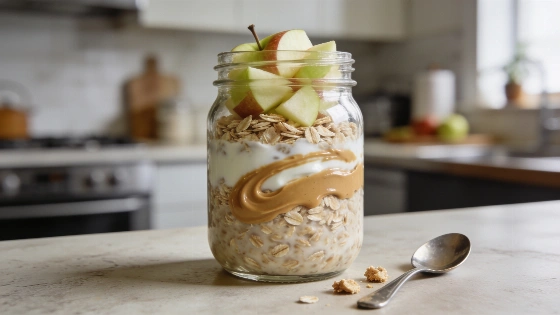
Bone loss can accelerate during the menopausal transition as estrogen levels fall. Its pace varies with age and body weight. Smoking, alcohol use and physical activity also influence it. High-Protein Apple & Peanut Butter Overnight Oats offers protein, fiber and some calcium in a breakfast prepared ahead. It is a food option, not a treatment for bone or muscle loss.
Per serving: 16 g protein, 11 g fiber and 108 mg calcium. The calcium is about 9% of the 1,200 mg daily recommendation for women over 50.
What the nutrients may contribute
Calcium matters for bone health, but 108 milligrams covers only part of a day's intake. U.S. recommendations call for 1,000 milligrams daily for women ages 19-50 and 1,200 milligrams for women over 50, according to the NIH Office of Dietary Supplements. The recipe's vitamin D content is not provided. Vitamin D helps the body absorb calcium, so the available figures cannot show its full contribution to bone health.
Protein supports muscle maintenance, but the 16 grams in one meal cannot be judged against a person's needs without considering their overall diet and circumstances. For older adults, ESPEN recommends at least 1.0-1.2 grams of protein per kilogram of body weight per day. Needs may be higher during illness or undernutrition. That guidance applies to older adults, not as a specific protein target for everyone in perimenopause.
Claims Check: Vitamin D is needed for calcium absorption, but the recipe's vitamin D amount is not provided. U.S. recommended intakes are 600 IU daily for adults through age 70 and 800 IU after age 70, so the calcium figure alone cannot establish a meal's complete contribution to bone health.
Convenience is part of the appeal
When comparing this recipe with a protein powder or ready-to-drink shake, check the full Nutrition Facts panel rather than relying on a front-label protein claim. Check serving size and calories, then look at protein and fiber. Added sugars and allergens matter, too. For powders, compare the grams of protein with the scoop's total weight. Check the cost per serving as well. Ingredient lists can show whether protein comes from dairy or soy. They can also show whether it comes from plants. A long list or a claim such as "gut health" does not by itself establish a benefit. This recipe's stated figures do not include calories or added sugar. They also do not include vitamin D, so those details cannot be inferred from the protein and fiber numbers.
Nutrition is one part of supporting bone and muscle health. Regular strength and weight-bearing activity also matter. So do avoiding smoking and limiting alcohol. This recipe can contribute protein, fiber and calcium to a varied diet, but it cannot replace broader nutritional needs or prevent age-related changes on its own.