
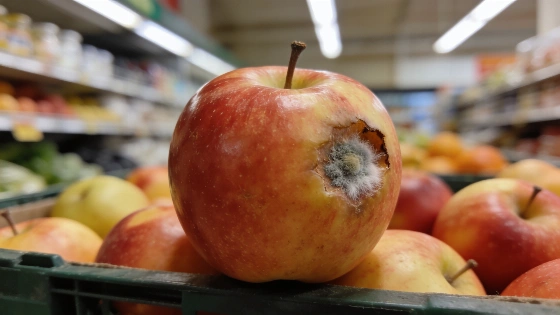
Under supermarket lights, a moldy apple can be easy to miss among sound fruit. USDA guidance advises shoppers to avoid visibly moldy produce and check for signs of deterioration. Look for discoloration and unusual odors, too. Inspect the skin and the area around the stem, then scan the display.
Firmness and intact skin are useful freshness cues. Bruises can leave an apple more vulnerable to spoilage. Cuts or tears are also a reason to choose another one, as is a sour or fermented smell. Dates, if displayed, offer context but do not replace checking the fruit itself.
A whole apple has no blend of ingredients to decode: the practical buying checks are firmness, intact skin, and no unusual odor or visible mold.
Check the skin and smell before buying
Take a few seconds to inspect individual apples rather than relying on the overall appearance of the display. A damaged spot on an otherwise firm apple is not the same as extensive spoilage. Still, avoid fruit with visible mold or a deteriorated appearance. If an apple has only a small bruise and is otherwise sound, cut away the damaged area before preparing it.
At home, wash whole apples under running water just before eating or preparing them. Do not use soap or detergent. Commercial produce washes are not recommended. Washing can reduce surface bacteria, but it cannot remove every possible contaminant. FDA guidance also recommends cutting away damaged areas and discarding produce with extensive spoilage.
[[smi_quote:{"style":"sideline","text":"Claims Check: USDA distinguishes superficial damage on firm produce, which may sometimes be trimmed, from mold in soft, high-moisture foods, which should be discarded because contamination may extend below the surface. For a shopper, visible mold is a clear reason not to buy the apple.","author":"USDA Food Safety and Inspection Service","url":"https://www.fsis.usda.gov/food-safety/safe-food-handling-and-preparation/food-safety-basics/molds-food-are-they-dangerous","rel":"nofollow"]]Keep apples cold and dry until eating
Refrigerate apples at home to slow quality deterioration, and wait to wash them until just before eating. Keeping stored fruit dry can help limit conditions that encourage spoilage. A crisper drawer works well. A perforated bag can retain some humidity while allowing air to circulate.
Apples release ethylene, a plant hormone that can speed ripening in produce sensitive to it. Keeping apples apart from leafy greens may help those foods retain their quality. Broccoli is another example of produce that can be affected.