
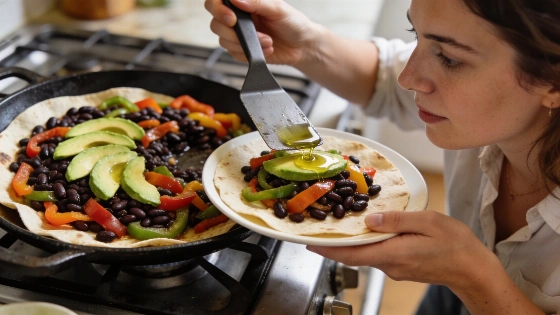
Getting 17 grams of fiber in one lunch isn't easy, but the Black Bean Fajita Skillet manages it. This meal isn't just filling-it's built for heart health, combining black beans, olive oil, and avocado to help lower LDL cholesterol.
If you've been told to avoid dietary cholesterol, it's worth knowing that the science has changed. Earlier studies blamed dietary cholesterol for raising blood cholesterol, but newer research shows the real impact comes from the types of fat and the amount of fiber you eat.
A single serving of this skillet delivers 17 grams of fiber-nearly half the daily recommended intake for adults-primarily from black beans, which provide about 7.7 grams of fiber per 100 grams cooked.
Why fiber and healthy fats matter for cholesterol
Black beans are the main ingredient here, and they're packed with soluble fiber. This type of fiber binds to cholesterol in your digestive tract and helps remove it from the body. Clinical reviews show that adding more soluble fiber can lower LDL cholesterol by about 8 mg/dL, which is a meaningful drop for heart health. Each serving of this skillet has 17 grams of fiber, well above the 6-gram minimum recommended by registered dietitian Claire Rifkin, M.S., RDN, for a cholesterol-friendly lunch. The fiber also helps you stay full longer by lowering the hunger hormone ghrelin and increasing leptin, which helps regulate metabolism.
Olive oil and avocado add unsaturated fats, which are good for your heart. The Harvard T.H. Chan School of Public Health notes that swapping saturated fats for unsaturated fats-like those in olive oil and avocado-can improve cholesterol numbers and lower cardiovascular risk. Olive oil has no cholesterol and is mostly made up of monounsaturated fat (about 66.7 grams per 100 grams). Avocado is another solid source of unsaturated fat, and both are recommended for supporting healthy cholesterol levels.
What makes a lunch truly cholesterol-friendly?
Not every lunch is equal when it comes to cholesterol. The Black Bean Fajita Skillet is low in saturated fat-just 1 gram per serving, or about 4 grams if you add cheddar cheese. That's well under the American Heart Association's guideline to keep saturated fat below 6% of daily calories (13 grams for a 2,000-calorie diet). This recipe skips red and processed meats, ultra-processed foods, and fried foods, all of which can raise LDL cholesterol.
For a cholesterol-friendly lunch, Rifkin suggests focusing on fiber-rich foods like beans, whole grains, and vegetables, while limiting saturated fat and choosing healthy fats such as olive oil, avocado, nuts, and fatty fish. Trans fats are mostly gone from the U.S. food supply, but small amounts still show up in animal products, so it's worth checking ingredient lists.
Claims Check: While many products market themselves as 'cholesterol-lowering' or 'heart-healthy,' only those with clinically significant amounts of soluble fiber and unsaturated fats-like black beans and olive oil-are supported by robust evidence. Regulatory authorities such as the FDA require that any cholesterol-related claims be substantiated by peer-reviewed research and clear Supplement Facts disclosure.
Practical takeaways for everyday eating
Managing cholesterol doesn't mean eating bland or complicated meals. The Black Bean Fajita Skillet shows that a single, well-planned lunch can be both flavorful and good for your heart. Its high fiber, low saturated fat, and healthy fats make it a strong choice for anyone looking to improve their cholesterol through food.
If you want to see how seasonal produce can also help with heart health and inflammation, Shake Nutrition's recent article covers more food strategies that work well with meals like this skillet.
The evidence is clear: meals built around beans, vegetables, and healthy fats are good for your heart and satisfying to eat. The Black Bean Fajita Skillet is a practical example of what a cholesterol-friendly lunch can look like, and it's easy to adapt in any kitchen that values both taste and health.