
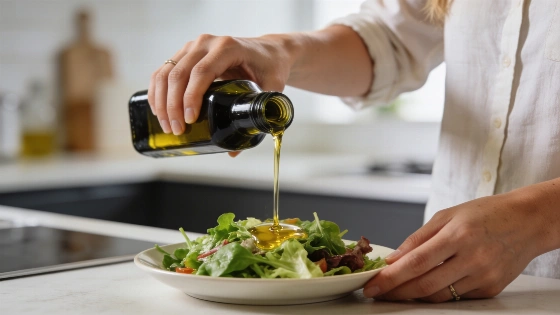
With so many oils crowding grocery shelves, extra virgin olive oil (EVOO) still stands out for its proven health benefits. Its reputation isn't just about Mediterranean tradition-there's solid research behind its nutritional value.
EVOO is unique because it's made by mechanical extraction, not chemical refining, which keeps more of the olives' natural antioxidants and flavors intact. It's especially rich in polyphenols, compounds that help protect the body from oxidative stress. The main fat in EVOO is oleic acid, a monounsaturated fat linked in studies to better blood lipid profiles, especially when it replaces saturated fat in the diet.
Extra virgin olive oil delivers a high ratio of monounsaturated fat (primarily oleic acid) and, when consumed at 20 g per day, provides at least 5 mg of polyphenols-meeting the EFSA-recognized threshold for supporting blood lipid protection.
Shake Nutrition Editorial Desk
Because EVOO is unrefined, it keeps more of the beneficial compounds found in olives. This minimal processing means more antioxidants and polyphenols end up in your food. However, EVOO has a lower smoke point than some other oils, so its polyphenols start to break down at higher temperatures. For moderate-heat cooking-like gentle sautéing, finishing dishes, or making dressings-EVOO gives you the most nutritional benefit.
If you're cooking at high heat, avocado oil is a good alternative. It has a neutral taste, a higher smoke point, and is also high in monounsaturated fats and antioxidants. Both EVOO and avocado oil have health claims recognized by regulators: the FDA allows a qualified claim for high-oleic oils (about 20 g per day, used instead of saturated fat, may reduce coronary heart disease risk), and the European Food Safety Authority (EFSA) recognizes the protective effect of olive oil polyphenols on blood lipids at effective doses.
Clinical trials back up EVOO's reputation. In the PREDIMED study, people following a Mediterranean diet with extra virgin olive oil had about 30% fewer major cardiovascular events-like heart attack, stroke, or cardiovascular death-over nearly five years. This kind of outcome-based evidence is rare for cooking oils and is a big reason EVOO is often called a functional food in public health circles.
Claims Check: While many oils are marketed for heart health, only extra virgin olive oil and high-oleic oils have qualified health claims recognized by the FDA and EFSA. These claims depend on daily intake and replacing saturated fat, not on miracle cures. Clinical trials like PREDIMED provide outcome-based evidence for EVOO's cardiovascular benefits.
FDA / Clinical Nutrition Review (source)
Quality matters, too. Choose EVOO in dark bottles to protect it from light, which can damage both flavor and antioxidants. Buy a size you'll use within a few months, since air, heat, and light slowly reduce the oil's nutritional value. Check the harvest and best-by dates, and pick oils bottled as recently as possible.
Premium EVOO usually costs more because of earlier harvesting, careful extraction, and stricter quality controls. Single-origin oils are valued for their unique flavors, but blends can also be excellent if they're handled and packaged well. For extra nutrition, seasonal produce like apples and blackberries can also support your health, as covered previously.
Despite all the new oils and marketing claims, the basics haven't changed: extra virgin olive oil is still the best choice for everyday nutrition, as long as you pay attention to freshness, storage, and how you use it. The research is clear-invest in good EVOO, use it generously at moderate heat, and switch to avocado oil for high-heat cooking. That's how a simple ingredient can make a real difference in your daily health.