
Most people start their day with more sugar than they realize. A single serving of many popular cereals can contain up to 18 grams of added sugar-about a third of the recommended daily limit before you even leave the house. For teenagers, cereal is one of the top sources of sugar, right up there with sodas and candy. Adults aren't far behind: 14% reach for cold cereal in the morning, often without knowing how much sugar is in the bowl.
Federal regulations now require Nutrition Facts labels to list both total and added sugars, with a daily value of 50 grams of added sugars for adults and children over 4. This shift spotlights added sugar as the key metric for cereal shoppers.
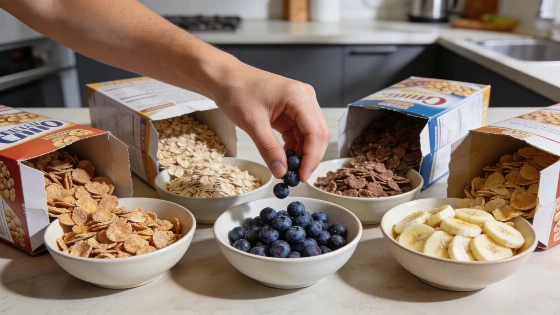
Post Shredded Wheat is the simplest choice. Lauri Wright, PhD, RD, points out that its ingredient list is just whole-grain wheat. There's no added sugar, 8 grams of fiber per serving, and it's a blank slate for real food. Wright suggests skipping the flavored versions and adding your own fruit for sweetness and extra fiber. Blueberries, strawberries, peaches, or bananas all work-and you won't add any sugar from the box.
If you want something chocolatey, Magic Spoon Cocoa Protein Cereal offers the flavor without the sugar spike. Jaclyn Fleisher, MS, RDN, notes that it has 13 grams of protein and no added sugars per cup, using monk fruit and allulose for sweetness. It's grain-free, gluten-free, and with milk, the protein climbs to 21 grams. The taste is familiar, but the nutrition is aimed at adults.
Claims Check: U.S. FDA labeling rules require that added sugars be listed separately from total sugars on Nutrition Facts panels, and brands cannot imply health benefits from low sugar content unless the product meets strict criteria. Always verify that 'low sugar' claims align with the FDA's definition-less than 5 grams of added sugar per serving for cereals is a practical benchmark for shoppers.
General Mills Fiber One is all about fiber, with 18 grams per serving and no added sugar. Fleisher recommends starting with a smaller portion if you're not used to that much fiber, but the benefit is clear: you get more than half your daily fiber in one bowl. It's sweetened with sucralose and fortified with iron, vitamin C, and B vitamins.
Recent changes in U.S. regulations have shifted the focus from total sugars to added sugars, especially for cereals marketed to children and those served in schools. Starting in October 2025, school breakfast cereals must have no more than 6 grams of added sugars per ounce. This matches the updated Dietary Guidelines for Americans, which now recommend limiting added sugar for everyone.
Other countries are moving in the same direction. The UK's school food standards encourage cereals with more fiber and less sugar, while Nigeria's NAFDAC rules limit marketing of cereals with more than 9 grams of total sugar per 100 grams to children. These standards help shoppers compare products and show why reading the label matters more than trusting the front of the box.
The sugar issue isn't just about cereal. Menning points out that salad dressings, pasta sauces, and breads often have added sugars too. Her rule: check the Nutrition Facts and stick to foods with less than 5 grams of added sugar per serving. Wright adds that sodas, sports drinks, sweetened coffees, and desserts are the biggest sources of sugar and should be the first to cut. Swapping out just one or two can make a real difference.
Dietitians also encourage people to take charge of flavor. Unsweetened cereals are a base for real ingredients: fruit, cinnamon, nuts, or seeds. Wright suggests treating plain cereal as a starting point and building flavor and nutrition with what you add. The same goes for coffee-skip the sugar, try cinnamon or vanilla, and make it your own.
The cereal aisle is full of sugar traps, but there are good options. The right cereal can deliver fiber, protein, and satisfaction without a sugar rush. Post Shredded Wheat, Magic Spoon Cocoa Protein Cereal, Cascadian Farm Purely O's, and General Mills Fiber One show that you don't have to choose between low sugar and real nutrition. The rest is just marketing.