
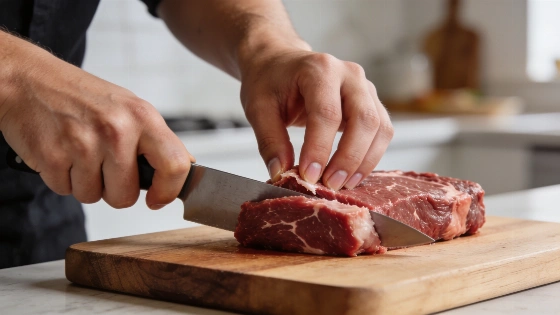
Beef has a reputation for being off-limits in heart-healthy diets, but that's not the whole story. Many fresh beef cuts at the grocery store actually meet the U.S. Department of Agriculture's definition of lean: less than 10 grams of total fat, no more than 4.5 grams of saturated fat, and under 95 milligrams of cholesterol per 100 grams. These standards are set by USDA labeling rules, with even stricter limits for cuts labeled "extra lean."
USDA defines 'lean' beef as containing less than 10g total fat, no more than 4.5g saturated fat, and under 95mg cholesterol per 100g-metrics that are now standard on retail labels and used for regulatory compliance.
The real challenge is finding lean beef among all the options at the store. Look for cuts with "loin" or "round" in the name-these are usually leaner. For ground beef, aim for 93% lean (7% fat) or higher. Marketing terms like "natural," "organic," "grass-fed," "prime," or "choice" describe how the beef was raised or graded, not its fat content. The only way to know if a cut is lean is to check the Nutrition Facts label for actual fat grams.
So, which cuts make the list? Here are 10 lean beef options, based on a 100-gram serving: Eye of round (171 calories, 29.8g protein, 4.83g fat), Top round (116 calories, 23.7g protein, 2.41g fat), Bottom round (150 calories, 21.2g protein, 6.59g fat), Sirloin tip (123 calories, 22g protein, 3.24g fat), Top sirloin (206 calories, 29.6g protein, 8.8g fat), Strip steak (117 calories, 23.1g protein, 2.69g fat), Tenderloin (168 calories, 27.7g protein, 6.36g fat), Flank steak (165 calories, 21.2g protein, 8.29g fat), Tri-tip (174 calories, 20.6g protein, 9.51g fat), and 93% lean ground beef (152 calories, 20.8g protein, 7g fat). Some stores carry even leaner ground beef, like 95% or 97% lean, depending on what's available. These numbers line up with current USDA food data and show that lean beef typically provides 20-21g protein per 100g for 93/7 ground beef, with about 150-160 calories per 100g, as listed in USDA FoodData Central.
Claims Check: While terms like 'natural' or 'grass-fed' are often highlighted on packaging, these do not guarantee lower fat content or a leaner nutritional profile. Only the actual fat and saturated fat values on the Nutrition Facts label determine if a beef cut meets the USDA's 'lean' or 'extra lean' criteria. Regulatory authorities require that any 'lean' claim be substantiated by laboratory analysis and label transparency.
If you're watching your heart health, lean beef can fit into a balanced diet in moderate amounts. More than half of the fat in beef is monounsaturated-the same type found in olive oil and avocados. Still, portion size matters. Even the leanest beef won't make up for oversized servings or a plate that skips vegetables and whole grains.
There are times when beef-lean or not-should be avoided. People with meat allergies, certain medical conditions, possible medication interactions, or personal or religious reasons should follow their doctor's and dietitian's advice.
For most people, lean beef is a practical, nutrient-rich option. The key is to look past old assumptions, read the labels, and make choices that balance taste and health. In a world full of confusing nutrition advice, the facts about lean beef cuts are straightforward: smart eating is about paying attention to details, not cutting out foods entirely.