
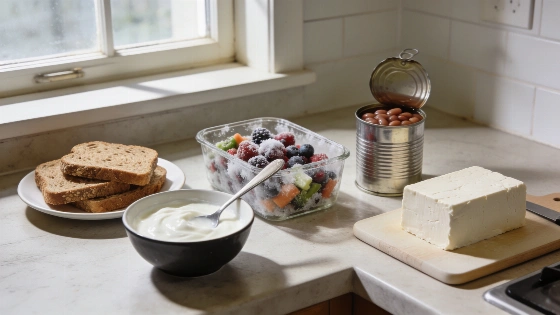
Processed foods get a bad rap, but the truth is more complicated. For anyone worried about colon cancer, the difference between ultra-processed and minimally processed foods matters a lot. Ultra-processed foods with lots of additives and preservatives have been tied to higher colon cancer risk in several independent reviews. But some processed foods can actually help protect you, according to registered dietitians who focus on cancer nutrition. The International Agency for Research on Cancer (IARC), part of the World Health Organization, lists processed meats as a Group 1 carcinogen for humans. There's a clear link to colorectal cancer-risk goes up about 18% for every 50 grams eaten daily. On the other hand, minimally processed foods like yogurt, frozen produce, and canned beans show lower risk in peer-reviewed studies.
You don't have to avoid everything in a package. The right processed foods, if you choose carefully, can give you fiber, probiotics, and plant nutrients that help your colon and may lower cancer risk. The trick is knowing which ones to pick and how to spot them in the store. Modern nutrition advice for cancer prevention draws a clear line: ultra-processed products (with added sugars, artificial colors, and preservatives) are not the same as minimally processed foods that keep their nutrition through simple freezing, canning, or fermentation.
For fiber-rich foods like canned beans and whole-grain bread, check the Nutrition Facts panel for at least 3-5 grams of fiber per serving and minimal added sugars or sodium.
What sets these processed foods apart
Dietitians make a clear distinction between ultra-processed foods and those that are just washed, frozen, canned, or fermented. Ultra-processed foods usually have added sugars, artificial colors, flavors, and preservatives. Minimally processed foods keep their main nutrients. The five foods experts highlight-yogurt, frozen fruits and vegetables, whole-grain bread, canned beans, and tofu-are processed for convenience or safety, not to stretch shelf life with synthetic additives.
Yogurt is known for its probiotics and calcium. Both are linked to lower colorectal cancer risk. Recent Nordic nutrition reviews and the World Cancer Research Fund both point to strong evidence that dairy foods and high calcium intake are tied to less colon cancer, not more, despite some claims. But only plain or unsweetened yogurts-those that keep the fermentation and calcium-show these benefits. Sugary, dessert-style yogurts do not. The advice: pick plain or unsweetened yogurt to skip added sugars, and add your own fruit for taste.
Frozen fruits and vegetables are another overlooked option. Stacy Davis, RD, LDN, says these foods are frozen at their freshest, which locks in nutrients and makes it easier to get enough fiber. Low fiber intake is linked to higher colon cancer risk, so the fiber in fruits and vegetables matters. Davis points out that fiber bulks up stool, speeds it through the colon, and feeds good gut bacteria, which helps keep the microbiome diverse. The best choices have no added salt, sugar, or sauces-just the fruit or vegetable itself.
Claims Check: While many brands market their products as 'gut health' boosters, only those with clinically relevant levels of live cultures (as listed on the Supplement Facts or Nutrition Facts panel) and minimal added sugars have demonstrated benefits in peer-reviewed studies. Regulatory authorities such as the FDA require that probiotic claims be substantiated by strain-specific evidence and accurate labeling.
How each food supports colon health
Whole-grain bread often gets a bad name, but dietitians say to look for "100% whole-grain" or "100% whole wheat flour" on the label. The fiber in whole grains is fermented by gut microbes to make short-chain fatty acids like butyrate, which help keep the colon healthy. Swapping white bread for whole-grain is a simple change with real benefits. According to PubMed clinical literature, fiber from whole grains is linked to lower colorectal cancer risk.
Canned beans are packed with fiber and make it easy to eat more legumes. Research cited by Andrews shows that people who eat more beans have better gut microbiomes, with more diversity and more good bacteria. One study found that eating legumes daily was tied to a 21% lower risk of colon cancer. Canned beans need no soaking or cooking-just drain, rinse, and toss them into salads, soups, or grain bowls.
Tofu is a flexible plant-based protein. Planells notes that soy foods like tofu give you fiber, calcium, and folate, all of which may help protect against colorectal cancer. Fiber bulks up stool and dilutes possible carcinogens. Calcium may bind compounds that could harm the colon lining. Folate helps keep DNA healthy. Tofu can be scrambled, blended into smoothies, or grilled for a plant-based meal.
Smart shopping and label strategies
Dietitians suggest a few simple ways to pick processed foods that help your colon. First, read the ingredient list and Nutrition Facts panel-don't trust the front of the package. Look for foods low in added fat, sugar, and salt, and high in fiber. Second, use healthy convenience: canned tomatoes, fish, whole-grain pasta, and salad kits can all fit into a healthy diet. Third, aim for 30 grams of fiber a day by eating more fruits, vegetables, whole grains, beans, lentils, nuts, and seeds. Finally, pick plain or unsweetened versions of ready-to-eat foods to keep added sugar down. For more on how fermented foods help gut health, the reported earlier article on yogurt, kimchi, and kombucha has more on how live cultures support digestion.
Why these choices matter for everyday eating
The evidence is clear: not all processed foods are the same. Yogurt, frozen produce, whole-grain bread, canned beans, and tofu each give you nutrients that help your colon and may lower colon cancer risk if you eat them often. The main point is that healthy eating doesn't mean cutting out all processed foods-just making smarter choices. By focusing on fiber-rich, minimally processed foods and reading labels, you can build a diet that helps your colon and your overall health. The push for "fresh" and "from scratch" often misses the real point: convenience and health can go together, and the right processed foods belong in your kitchen.