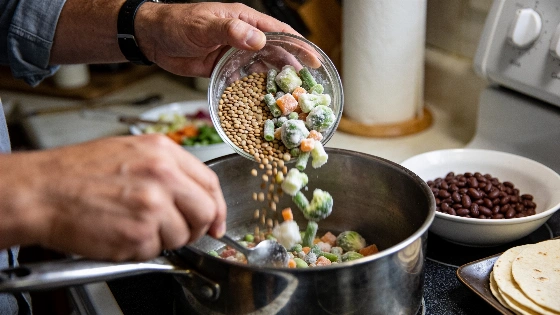
A can's sticker price tells only part of the story at checkout. Beans and lentils can go into soups or tacos, then carry over into another meal. Frozen vegetables can be portioned as needed. Whether any of these foods saves money depends on local prices, package size and how much gets used.
Familiar food traditions can stay on the menu. The source article attributes budget and meal-planning suggestions to registered dietitian Keisha Calhoun, including adapting familiar meals rather than abandoning them. The available research materials do not independently verify her comments or the article's attribution to the American Heart Association. Those statements are reported advice, not independently confirmed endorsements.
When comparing canned foods, check sodium per labeled serving and the number of servings in the container. Rinsing may reduce some sodium, but the amount varies by product and preparation.
Stretch ingredients across meals
Build meals around ingredients that can do more than one job. Beans or lentils can appear in several dishes, while frozen vegetables can be added as needed. Soups and tacos are flexible ways to use what is already on hand. Ground turkey or lean ground chicken may fit some recipes, but their cost compared with other proteins depends on the store, cut and package price.
Compare the cost of the amount you will actually use, not just the package price. Check the price per serving when it is listed. The USDA announced $13.8 billion in farm income and price-support payments in October 2026. That figure covers agricultural programs; it does not establish retail prices or show that healthy groceries have become more affordable. Crop forecasts also do not compare the foods in a shopper's cart. Local shelf labels remain the practical guide.
Claims Check: FDA label guidance treats 5% Daily Value or less per serving as low and 20% or more as high. These are screening cues, not a verdict on an entire meal; compare similar serving sizes, and do not assume rinsing removes a fixed amount of sodium.
Check labels on canned foods
Compare sodium per serving on the Nutrition Facts label, then check how many servings the can contains. A product that appears lower in sodium may list a smaller serving size, so compare like with like. Check added sugars when relevant and review the ingredient list. Rinsing canned vegetables may reduce some sodium, but it does not replace checking the label. The reduction varies by product.
Shake Nutrition's canned-soup label review compares sodium and nutrition across products. Similar label checks can help when evaluating meal-replacement shakes or protein powders. Compare serving size and calories, then look at protein and added sugars. Check the price per serving rather than relying on claims such as "clean" or "heart healthy."
A proprietary blend can make it harder to see how much of each ingredient a product contains. Small, workable swaps can preserve family food traditions. Choose staples that fit household meals and budget, and calculate costs using the portion people will actually eat.
A shake's marketing language alone does not show that it is nutritionally equivalent to a meal or appropriate for every person.