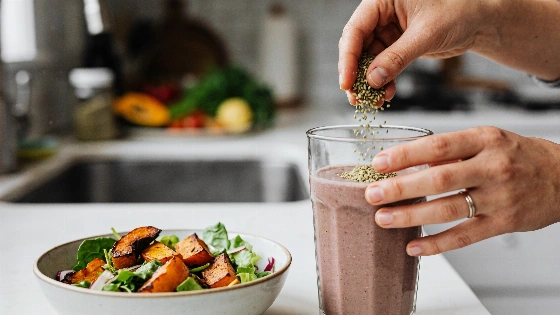
Three tablespoons of hemp hearts provide about 9.5 grams of protein and 2.6 grams of ALA omega-3s. Birmingham-based registered dietitian Maddison Garcia recommends additions like these to make familiar smoothies and salads more satisfying.
For a precise serving comparison, USDA FoodData Central lists about 166 calories and 9.5 grams of protein in 30 grams of hulled hemp seeds, roughly three tablespoons. That serving contains 14.6 grams of fat and 2.6 grams of ALA. It also provides about 210 milligrams of magnesium and 495 milligrams of phosphorus. Iron comes to 2.4 milligrams, while fiber adds 1.2 grams. ALA is a plant-based omega-3, distinct from EPA and DHA in seafood. The body converts ALA to those fatty acids only in limited amounts.
These additions can change a meal's texture or deepen its flavor without a full recipe overhaul. Pick one that fits the dish.
Blend in extra substance
Frozen cauliflower rice has a mild flavor that fruit or nut butter can mask. Its small pieces also thicken a smoothie. Cauliflower provides fiber and essential vitamins. It is a cruciferous vegetable that contains glucosinolates, compounds that can interact with plant enzymes when the tissue is chopped or crushed. Gastroenterologist Will Bulsiewicz has described this process in cauliflower and other cruciferous vegetables. Researchers are studying the compounds for potential biological effects, but that does not mean eating cauliflower prevents cancer or treats inflammation.
For a salad, sauté cauliflower rice in a skillet with a little extra-virgin olive oil. Cooking it on the stovetop helps remove moisture left by steaming and brings out a deeper, roasted flavor.
Hemp hearts have a soft texture and mild, nutty taste. Stir them into a fruit-forward smoothie or scatter them over a smoothie bowl. Their magnesium and phosphorus add to their nutrient profile. Hemp hearts also provide iron. Three tablespoons contain about 2.6 grams of ALA, more than twice the 1.1-gram adequate intake for adult women. ALA is not interchangeable with the marine omega-3s EPA and DHA.
Hemp seeds also work in savory dishes. Blend them into a dressing or vinaigrette. They can go straight over a salad, or into savory granola as a topping for salad or creamy soup.
Silken tofu makes a smoothie creamy without adding a strong flavor. Its custard-like texture comes from being left undrained and unpressed, unlike regular block tofu. It also blends into dressings and sauces. Registered dietitian Natalie Rizzo says soft or silken tofu commonly provides about 4 to 6 grams of protein per serving. Firm or extra-firm tofu provides roughly 8 to 12 grams. Calcium content varies by product and coagulant. Tofu made with calcium sulfate can provide calcium, so check the label. Rizzo discusses tofu's nutrition and regular use in a TODAY dietitian feature.
For a salad, marinate silken tofu in soy sauce and honey, then finish it with chili crisp. Serve it over shredded cabbage and carrots. Add cucumber and radishes for crunch. A three-ounce serving contains about 40 calories and four grams of complete plant-based protein. Varieties made with calcium salts also provide calcium.
Bring fall flavors to the bowl
Soy contains phytoestrogens, plant compounds structurally similar to estrogen. Research has consistently shown that soy foods do not disrupt hormones and may offer benefits, including modest relief from hot flashes. Preliminary studies have also linked soy intake with favorable fertility outcomes. Rizzo says people with a soy allergy should avoid tofu and other soy foods. For most people, regular tofu consumption is considered safe. The American Cancer Society's evidence summary says soy may lower the risk of some cancers or have no noticeable effect. It does not establish tofu as a treatment.
Canned pumpkin purée thickens smoothies while adding fiber. It provides potassium and beta carotene, too. Freeze the purée in disks on a lined baking sheet to make smoothie packs. Choose a can labeled 100% pure pumpkin, with pumpkin as the only ingredient. Pumpkin pie filling typically contains added sugar. It may also include spices and preservatives.
Pumpkin purée also works in a salad dressing with maple syrup and apple cider vinegar. Add pumpkin seeds for crunch. For a closer look at how serving size affects fall produce comparisons, see this fall produce guide.
Roasted vegetables bring concentrated flavor and browned edges to salads. Toss Brussels sprouts with extra-virgin olive oil. Broccoli florets work, too, and onions are another option. Roast at 400°F until browned and tender. Spread the vegetables in an even layer on the baking sheet to encourage browning. Serve them with crisp greens and toasted nuts. A bright dressing brings the salad together.
For smoothies, try steamed and cooled kale or squash. Sweet potatoes work, too. Cooking softens the vegetables' fibrous structure, helping them blend more smoothly. It also makes some beneficial compounds, including carotenoids, easier for the body to absorb.
This article contains product affiliate links. Shake Nutrition may receive a commission if you make a purchase after clicking one.