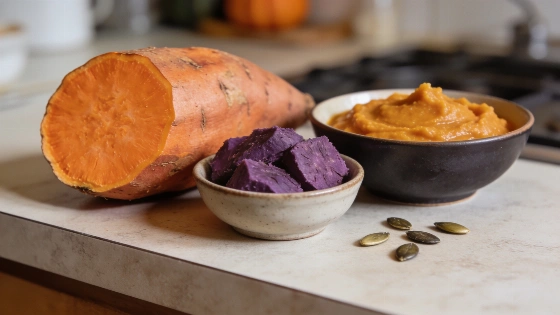
One cup of canned sweet potato and one cup of pureed pumpkin are not a like-for-like comparison.
Both orange-fleshed vegetables can provide beta-carotene, which the body can convert to vitamin A. Pumpkin may also contain alpha-carotene and lutein, with zeaxanthin present in varying amounts. Alpha- and beta-carotene have provitamin A activity; lutein and zeaxanthin do not. The NIH vitamin A fact sheet explains why the distinction matters: total carotenoids cannot be treated as equivalent to vitamin A activity.
A 114 g baked sweet potato provides about 4 g of fiber, 22 mg of vitamin C and 542 mg of potassium; an orange-fleshed one may provide about 13 mg of beta-carotene. Variety and serving size still matter.
Each vegetable has a different edge
Orange sweet potatoes are especially rich in beta-carotene. Yellow and white varieties generally contain less. Pumpkin's carotenoid proportions shift with its type and maturity, making broad claims such as "more antioxidants" hard to judge unless the specific food and measured compounds are named.
The original comparison gives one cup of pureed pumpkin 7 g of fiber and 3.4 mg of iron. One cup of canned sweet potato has 4 g of fiber and 3.4 mg of iron. Those figures describe different preparations, not a controlled comparison. USDA FoodData Central lets readers check the food and preparation entry; the fairest comparison uses the same weight or serving basis.
Cooking can change both carotenoid concentration and availability, and results vary by method. A review found that one preparation reduced pumpkin beta-carotene concentration, while estimated bioavailability rose after deep-frying. Boiling and steaming had no statistically significant effects in that study. That finding concerns a specific measure, not the overall nutritional quality of a meal, so it does not make deep-frying a health strategy.
Claims Check: Antioxidant content is not proof that a food or powder prevents disease or delivers a specific health benefit. Pumpkin research includes promising compounds, but findings are largely preclinical and can depend on preparation; a product claim should be assessed against the ingredient amount, serving size and relevant human evidence.
Pumpkin seeds have a different nutritional profile from pumpkin flesh. One ounce provides about 9 g of protein and 2 g of fiber, along with zinc and magnesium. In a shake or powdered blend, check whether the label names pumpkin flesh or a seed ingredient, such as seed protein or seed powder. Those forms do not imply the same nutrient contribution. A proprietary blend that lists only its combined weight leaves shoppers unable to tell how much pumpkin, or another active ingredient, a serving contains.
Color changes the comparison
Purple sweet potatoes contain anthocyanins as well as carotenoids. Their pigments give the potatoes their color, but an antioxidant's presence alone does not show that a food improves exercise recovery or prevents disease. The same caution applies to "superfood" claims on drink mixes. Check for a named ingredient and a disclosed amount per serving, then look for evidence that matches the product's claim.
Pumpkin's lutein and zeaxanthin set its carotenoid mix apart, while orange sweet potatoes can provide substantial beta-carotene. "Antioxidant rich" and a colorful ingredient list do not reveal how much of a compound is in a scoop. For a shake or meal-replacement powder, compare the Nutrition Facts or Supplement Facts serving size and ingredient form. Check the disclosed quantities too. Pumpkin or sweet-potato powder should not be assumed to match the nutrient profile of a serving of the whole cooked food.
For packaged products, the label shows whether individual ingredient amounts are disclosed. A combined blend weight does not reveal how much pumpkin or sweet potato a serving contains.