
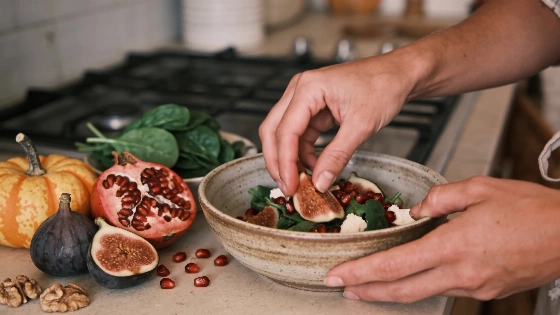
A front-of-pack "anti-inflammatory" label can make a powder look like a shortcut. But a marketing claim is not proof of a clinical effect, and the same standard applies to familiar foods.
Figs, pomegranates, pumpkin, spinach and walnuts bring different nutrients to October meals. They can add fiber, plant compounds and healthy fats, but none is a treatment for chronic inflammation. Chronic inflammation is associated with a range of health conditions. A food's nutrient content or a proposed biological mechanism does not establish that it prevents or treats disease.
Evidence more strongly supports an overall eating pattern than any one ingredient. When comparing food-based options with a greens powder or meal replacement, check the Nutrition Facts or Supplement Facts panel. Look at serving size and ingredient amounts, then check for added sugars. "Superfood" and "detox" claims don't answer those questions.
Build fall meals around plants
Fresh figs are nearing the end of their peak season. They provide fiber and plant compounds. Dried figs offer more fiber per 100 g, but they are also more concentrated in calories and sugars. Check whether dried fruit has added sugar, and compare serving sizes instead of treating fresh and dried forms as interchangeable. Figs work in yogurt or a fall salad, or as a snack.
Pomegranates add polyphenols, plant compounds studied for their potential biological effects. Gut bacteria can transform some of these compounds, but that mechanism alone does not show that eating pomegranate will produce a specific health outcome. The arils add flavor and texture to chickpea salad or toast. Treat "antioxidant" and "immune support" claims on drink mixes as claims to evaluate, not guarantees.
Pumpkin provides beta-carotene, which the body can convert to vitamin A, and makes a convenient addition to soups. Canned pureed pumpkin is practical. Check the ingredient list to distinguish plain pumpkin from sweetened pie filling. The same check matters with pumpkin-flavored shakes or powders: the flavor name doesn't say how much pumpkin the product contains, or whether it has added sugar.
Frozen chopped spinach can go straight into soups and stews. Fresh leaves work in a salad with apples and squash. Spinach supplies fiber and micronutrients, but a greens powder is not automatically equivalent to a serving of vegetables. Compare serving size and listed ingredients. Check the amount of each ingredient, too, rather than treating the total weight of a proprietary blend as the dose of any one component.
Put the nutrients to work in everyday meals
Walnuts contribute alpha-linolenic acid, or ALA, an essential plant-based omega-3 fatty acid. USDA FoodData Central provides standardized food data for comparing foods. Its commonly cited values for English walnuts per 100 g are about 654 calories, 15.2 g protein, 65.2 g fat, 6.7 g fiber and 9 g ALA. That 100 g amount is a reference for comparison, not a suggested serving. Walnuts are energy-dense, so portion size matters. Add a modest handful to oatmeal or a salad, or combine them with spinach in pesto.
Nutrient content and proposed mechanisms offer useful context, but neither establishes that a food prevents or treats disease. Early findings about plant compounds require the same distinction. A research evidence breakdown on parsley, for example, examines promise around cancer-risk reduction without treating that promise as proof.
Evidence on anti-inflammatory eating primarily concerns dietary patterns that include vegetables and fruit. It also covers legumes and whole grains, along with nuts and olive oil. Fish is another part of these patterns. They limit refined foods and sugary drinks, as well as processed meat. Small clinical-trial meta-analyses associate Mediterranean-style eating with modest average reductions in hs-CRP and IL-6. Reported hs-CRP changes are typically under 1 mg/L and vary with participants' starting levels and other changes, including body weight. These findings do not make an individual food or supplement a treatment.
For October meals, pumpkin and spinach can go into soups. Figs or pomegranate arils work in salads and yogurt, while walnuts add crunch. When choosing a shake or powder for convenience, compare serving size with its protein and fiber amounts. Check added sugars and allergens, then look for fully disclosed ingredient dosages.