U.S. guidelines classify readings of 130-139 mm Hg systolic or 80-89 mm Hg diastolic as stage 1 hypertension. The treatment target for many adults with hypertension is below 130/80 mm Hg, though individual care plans can differ. High blood pressure often has no noticeable symptoms. Pumpkin seeds are food, not a treatment or a guarantee of lower readings.
One ounce supplies nutrients involved in normal body functions. The practical question is how that serving fits into the rest of the diet. Unsalted seeds avoid the sodium added to many seasoned snack products. Shoppers can compare sodium and serving sizes on the Nutrition Facts panels.
One ounce of pumpkin seeds contributes magnesium and potassium, but it is only one small part of an overall eating pattern. Check the serving size and sodium on the package rather than judging a snack by one nutrient alone.
What pumpkin seeds contribute
A one-ounce serving provides about 156 mg of magnesium, or 37% of the Daily Value. Magnesium plays a role in normal muscle and nerve function, including in blood vessels. That nutrient content is useful context, but it does not establish that pumpkin seeds themselves lower blood pressure.
The same serving of unsalted seeds contains about 223 mg of potassium. That is a modest contribution next to the roughly 4,700 mg of potassium in a DASH-style diet used in one AHA research program. The figure describes a study diet, not a target that a serving of seeds can meet. The NIH potassium overview provides broader context on potassium's role in health.
Evidence for blood-pressure control concerns dietary patterns, not a single "superfood." The DASH research program found benefits from a pattern rich in fruits and vegetables. Low-fat dairy was part of that pattern. Later DASH-Sodium research found added benefit from reducing sodium. The original DASH clinical trial puts one snack serving in perspective: the whole pattern matters.
Claims Check: Preliminary results presented at an AHA scientific session in 2026 found no dangerous rise in blood potassium among participants taking some common blood-pressure medicines as they increased potassium-rich foods within DASH. Those findings do not establish safety for everyone: people with impaired kidney function, including chronic kidney disease, may be at increased risk of high blood potassium and should discuss major dietary changes or salt substitutes with a clinician.
Pumpkin seeds also contain arginine, which the body can use to make nitric oxide, a molecule involved in blood-vessel function. Results from arginine supplement studies cannot be assumed to apply to the amount naturally present in a serving of seeds. Evidence for pumpkin seeds as a blood-pressure intervention remains limited.
A one-ounce serving contains about 10 grams of unsaturated fat. Unsaturated fats can fit into a heart-conscious eating pattern, but that amount does not mean seeds alone will lower LDL cholesterol or prevent artery plaque. The overall mix of foods matters, as do the serving's calories.
Serving size, sodium and labels matter
For a simple snack comparison, check the serving size in grams and sodium per serving. Compare raw seeds with roasted ones, then check salted and flavored products. A package may contain multiple servings. Eating straight from the bag can push sodium and calorie intake above the panel's per-serving figures.
When comparing whole seeds with pumpkin-seed powder, a protein blend or a nutrition shake, check what the product is designed to provide. Conventional foods generally use a Nutrition Facts panel; dietary supplements use Supplement Facts. Compare grams per serving, protein and calories. Then check added sugars and sodium, and read the listed ingredients. A blend's name or front-of-pack claim does not show how much of each ingredient it contains.
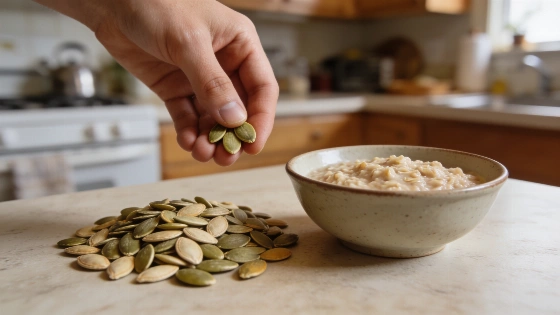
Choose unsalted seeds when limiting sodium is a priority, and add flavor with herbs or spices. They can go on oatmeal or yogurt. They also work over salads, and grain bowls are another option. Whether shelled pepitas or seeds with shells are more practical comes down to preference and how the serving is measured. Check the package's stated serving rather than assuming equal handfuls are nutritionally identical.
The American Heart Association identifies DASH as a proven dietary pattern for blood-pressure management. It emphasizes vegetables and fruits, along with whole grains and nuts. Legumes and low-fat dairy are also part of the pattern. It limits salt and saturated fat, and also limits added sugar.
Pumpkin seeds can add nutrients to that broader pattern, especially when unsalted. Their contribution is modest, and they may offer a lower-sodium snack option. They do not replace blood-pressure monitoring or medical care. Nor do they replace an eating pattern that addresses sodium and overall diet quality.