
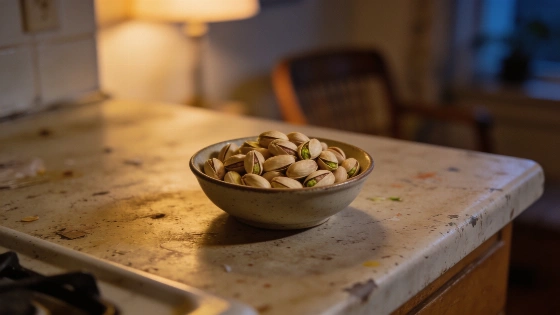
No results have been published from university research groups conducting studies supported by American Pistachio Growers. Direct human evidence that pistachios improve sleep is not yet available.
A review names several pistachio components that could be relevant to sleep biology: tryptophan, vitamin B6, magnesium, dietary fibre, polyphenols and phytomelatonin, the plant form of melatonin. Finding them in a food does not show how much the body absorbs or whether they change sleep. Any effect might not be noticeable. That distinction matters.
A 28 g serving is reported to contain about 71 mg of tryptophan, 6 g of protein, 3 g of fibre and 160 calories. These are nutrition figures, not evidence of a sleep effect.
What the proposed biology can tell us
The review looks at possible links between pistachio compounds, melatonin production and signals along the gut-brain axis. These pathways raise questions for researchers. They do not show that eating pistachios improves sleep.
A 28 g portion is reported to provide about 71 mg of tryptophan. The review describes that as roughly 20% of the daily amount for an adult weighing about 70 kg. This figure describes the food's contents. It does not show that tryptophan reaches the brain in a way that improves sleep. How much phytomelatonin a person absorbs, and whether it affects sleep in people, also remain uncertain. No effect is shown.
Well-designed trials need to test whether pistachio nutrients or bioactive compounds change melatonin, sleep quality, sleep duration or other outcomes. Researcher Marie-Pierre St-Onge has made that point. The results of the university studies supported by American Pistachio Growers have not been published. The evidence is still pending.
Claims Check: Nutrients associated with sleep are not proof that a food improves sleep. The ongoing research needs to measure outcomes in people-including sleep duration and quality-and establish whether the relevant compounds are bioavailable before a serving size or bedtime routine can be recommended.
How to read the nutrition numbers
A 28 g portion is a reference point, not a sleep prescription. Its reported protein, fibre and calorie figures can help shoppers decide how pistachios fit into a snack or meal. Values vary by product and serving size. Check the serving weight and Nutrition Facts panel on packaged pistachios. USDA FoodData Central also provides a reference for comparing generic foods.
These checks matter when a company uses a food's nutrients to promote a powdered meal replacement, protein powder or functional drink mix. Look at the serving size in grams, calories, protein and added sugars. Check the protein source too, such as whey, casein, pea or a blend. A "sleep" or "relaxation" claim does not replace ingredient amounts or clinical evidence for the finished product. Check the label closely.
Words such as "gut health," "immune support" or "clean energy" do not prove a product works. For a shake or supplement, look for stated amounts. A proprietary blend may list its total weight without showing the dose of each ingredient. FDA structure/function claim guidance makes clear that marketing language is not the same as proof that a product treats a medical condition.
Pistachios may be a satisfying snack as part of an overall eating pattern. Their protein and fibre content does not prove a sleep benefit. Food choices and sleep can also intersect through shared routines. Research on couples explores that context, but it does not confirm an effect from any particular food.
The practical takeaway is simple: treat pistachios as food, not a sleep intervention. Researchers still need controlled trials to test dose, bioavailability, melatonin levels and sleep outcomes. Only then can evidence-based recommendations address how much to eat or when.