
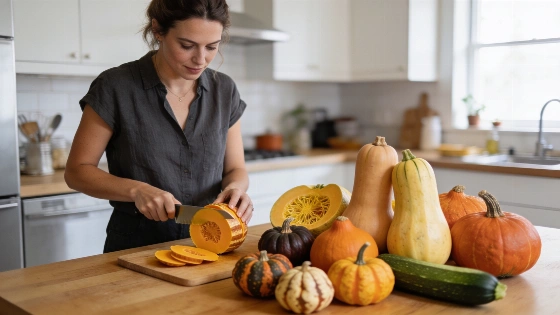
There isn't one "healthiest" squash. Each type has its own strengths, and the real benefit comes from switching things up. Swap your usual side for roasted honeynut or spiralized zucchini, and you're not just changing the taste-you're getting a new mix of nutrients that matter for your immune system, heart, and even hydration.
Which squash offers the most vitamin A and fiber
USDA data confirms that 1 cup of baked butternut squash provides 6.5g fiber, 34% DV vitamin C, and 127% DV vitamin A-making it one of the most nutrient-dense winter squashes per serving.
Acorn squash might look plain, but it's packed with potassium-19% of your daily value per cup of baked cubes. Dietitian Whitney Stuart notes its role in supporting healthy blood pressure and heart health. Acorn also brings 9 grams of fiber, 25% of your daily vitamin C, and more than 10% of your daily iron, folate, and magnesium. Its small size makes it easy to stuff and serve as individual portions.
Pumpkin isn't just for lattes or Halloween. Amy Brownstein, M.S., R.D., calls it a nutritional powerhouse, with fiber, vitamins, minerals, carotenoids, and polyphenols that may help protect against cell damage and inflammation. A cup of canned pumpkin has 7 grams of fiber and over 200% of your daily vitamin A. If prepping fresh pumpkin feels like too much work, canned pureed pumpkin (not pie filling) is an easy shortcut for smoothies, soups, chilis, baked goods, or pasta, adding mild sweetness and a nutrition boost.
Claims Check: While many brands market squash-based powders and blends as 'immune boosters' or 'detoxifiers,' FDA regulations require that such claims be substantiated by clinical evidence and not mislead consumers. Always verify that the Supplement Facts panel discloses actual dosages of key nutrients like vitamin A, C, and fiber, rather than relying on proprietary blends or vague superfood claims.
How the different squash varieties compare
Honeynut squash, often mistaken for a mini butternut, actually packs more nutrition. Amy Beney, M.S., R.D., C.D.C.E.S., notes that honeynut delivers fiber, beta-carotene, vitamin C, and potassium, with twice the beta-carotene of butternut. Its thin, edible skin means you can skip peeling and get even more nutrients and flavor when roasted.
Kabocha squash stands out for its creamy texture and flavor that's somewhere between sweet potato and pumpkin. Cindy Chou, R.D.N., chef and founder of The Sound of Cooking, points out that kabocha has more potassium, vitamin C, and vitamin A than pumpkin, plus a thin edible skin that adds fiber and saves time in the kitchen.
Zucchini, the only summer squash on this list, is available year-round and works as a low-calorie, low-carb option-just 27 calories and 5 grams of carbs per cup of cooked slices. Its high water content helps with hydration, and leaving the skin on gives you more fiber. Sara Wisehart, M.S., R.D., L.D., suggests grilling, roasting, or spiralizing zucchini into "zoodles" for a hydrating, fiber-rich addition to any meal.
If you're focused on inflammation, the benefits of squash varieties line up with recent clinical research on seasonal produce that supports immune health and lowers chronic disease risk.
Each squash brings something different: butternut and honeynut for vitamin A, acorn for potassium, pumpkin for anti-inflammatory compounds, spaghetti squash and zucchini for low-carb flexibility, and kabocha for creamy texture and edible skin. Instead of picking a single winner, try rotating these squashes through your meals year-round. You'll get a wider range of vitamins, minerals, and antioxidants that support healthy aging and overall wellness-proof that variety on your plate is what really counts.