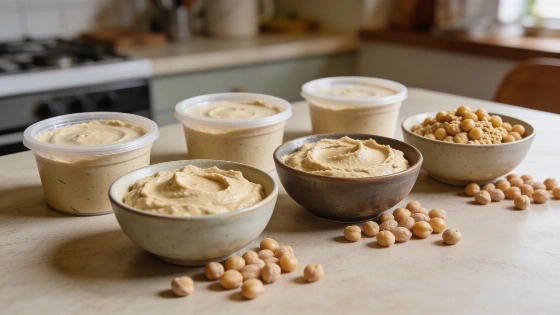
In Australia, packaged-food ingredients are listed by weight. The first ingredient is present in the greatest amount, and in some of the tubs dietitians examined, oil comes before tahini.
Dietitians Anna Morgan and Alex Parker of The Biting Truth use more than 65% chickpeas as a practical benchmark. Parker says she would put back a tub if oil comes first. That 65% figure is their guideline, not a formal Australian minimum for hummus.
Ingredient lists also identify tahini, which is made from sesame seeds. Sesame is a declarable allergen.
Since 25 February 2024, Australia's Plain English Allergen Labelling requirements have applied to packaged foods. They set out clearer wording for allergen declarations under the Food Standards Code, as described by Food Standards Australia New Zealand.
The Australian Food Composition Database puts commercial hummus at an average of 248 kilocalories and 6.9 grams of protein per 100 grams. Its figure for cooked chickpeas is 119 kilocalories and 7.2 grams of protein per 100 grams. Those are category averages, not the nutrition values of the three tubs in this comparison. Each product's Nutrition Information Panel gives its specific figures. The database is maintained by Food Standards Australia New Zealand.
Obela Hommus Classic tops the comparison at 71% chickpeas and 13% tahini, with canola oil also in the recipe. A 220g tub costs between $4.50 and $5. Parker said it has fewer calories than the other two products, attributing the difference to more chickpeas and less canola oil.
Yumi's Traditional Hommus and Aldi's Deli Originals Fresh Traditional Style Hommus each contain 66% chickpeas. Yumi lists canola oil before tahini, and its 200g tub costs $5. Aldi lists vegetable oil before tahini. Its 200g tub costs $2.29.
Aldi is the least expensive option; Obela has the highest chickpea proportion. Ingredient order matters here: as this grocery-label guide explains, the first-listed ingredient is the one present in the greatest amount.
Parker said traditional hummus would be built mainly around chickpeas and tahini. A traditional recipe would use olive oil, with lemon and garlic for flavour. Salt and pepper would round it out. Recipes vary in the type and amount of oil they use.
All three products assessed use seed oils rather than olive oil. The oil's position in the ingredient list differs from tub to tub.
"Oil and tahini are important components of it, so it's never going to have 100 per cent chickpeas," Parker said. She recommends checking that chickpeas lead the ingredients and make up a high proportion of the product.
The dietitians noted that shoppers may eat only a couple of tablespoons at a time. Parker said freshly made hummus typically lasts around three to five days, less time than shoppers may expect from supermarket tubs.