Breakfast and lunch still take some planning; the five-ingredient limit applies to dinner. Across seven days, the menu aims to provide at least 80 grams of protein and 30 grams of fiber each day.
The plan is built around 1,800 calories a day, with modifications for 1,500 and 2,000 calories. Its estimated daily totals range from about 1,775 to 1,819 calories, while protein ranges from 88 to 123 grams. Those figures describe this menu, not universal nutrition targets. Energy needs vary with age and body size, as well as activity and health status.
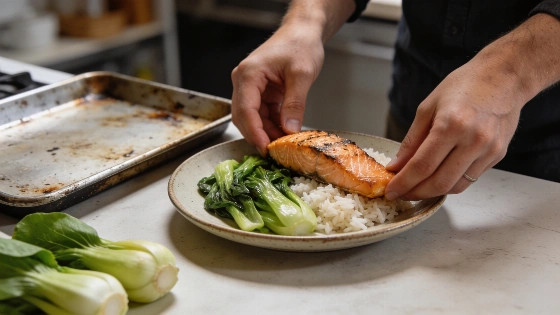
Day 1's dinner is Honey Salmon with Potatoes & Spinach. Garlic-Thyme Chicken with Green Beans & Rice follows on Day 2. Day 3 brings 5-Ingredient Taco-Stuffed Peppers, then Ground Turkey & Sweet Potato Skillet on Day 4. Chicken-Stuffed Baked Potato is on Day 5. The final dinners are Tajín Shrimp Tacos with Cabbage Slaw and Sheet-Pan Salmon with Bok Choy & Rice.
The plan's overview says the recipes use one-pot and sheet-pan approaches. The short ingredient limit applies to dinner only; breakfast, lunch and snacks are part of the daily menus too.
Breakfast rotates among Raspberry-Banana Yogurt Parfait and Strawberry-Peanut Butter Overnight Oats. High-Fiber Breakfast Casserole is another option. Lunch includes White Bean & Avocado Bowls and Goddess Veggie Bowls with Chicken. Black Bean & Quinoa Bowl rounds out the lunch choices. Overnight oats may work well for readers who prep breakfast ahead; the site's overnight oats ideas offer more options in that format.
Repeating some breakfasts and lunches can make the week easier to plan and prep. The menu includes salmon and chicken, along with shrimp, beans and quinoa. Vegetables feature throughout. That broad mix fits the American Heart Association's guidance to include fish and legumes, as well as vegetables and whole grains, alongside lean protein. The AHA recommends adding nutrient-rich foods or replacing less nutritious choices with healthier ones, rather than focusing only on foods to avoid.
Registered dietitians created the plan, and its nutrition analysis used the ESHA Food Processor database. The plan also offers snack suggestions and meal-prep tips. Frequently asked questions are included. Daily protein and fiber totals are estimates for this menu, not a measure of what every person needs; readers can adjust it to their individual needs.
The American Heart Association says a fixed calorie target is not right for everyone. Its heart-health guidance describes the value of nutrient-dense choices and notes that energy needs differ from person to person. Anyone managing a medical condition or following specific dietary restrictions can discuss adjustments with a healthcare professional.
The overall eating pattern matters when choosing high-protein foods. The AHA has reported that diets high in ultra-processed foods are often associated with greater intake of sodium and added sugars. They are also often associated with higher saturated-fat intake. Meals built around fish and poultry, or beans and vegetables, can fit into a varied eating pattern. The nutrition of each serving still depends on its ingredients and portions. The association's overview of ultra-processed foods discusses these broader dietary considerations.