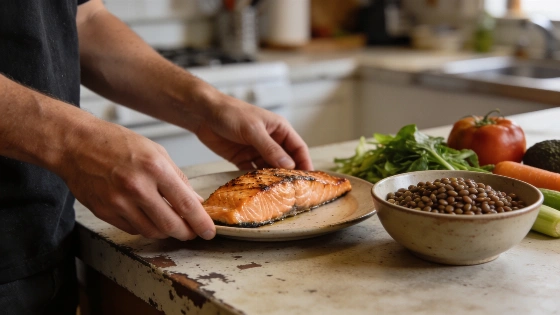
A salmon serving and a protein cookie can each deliver protein, but the number alone says little about what else comes with them. Salmon also supplies omega-3 fats and vitamin D. It provides selenium and vitamin B12, too. A cookie may mainly offer added protein.
Protein helps build and repair tissue. It supports immune health and can help people feel full. But social media's proteinmaxxing trend has turned a useful nutrient into a numbers chase. Some people now worry they need a shake after every bit of activity or have missed a daily target.
Most people can get protein from regular foods. Powders and shakes can be convenient, but they are tools, not requirements.
What protein numbers can leave out
A high protein number does not automatically make a food nourishing or satisfying. Some packaged snacks that are high in protein also contain substantial sodium. Others have added sugars or different ingredients worth checking. The nutrition label and ingredient list matter alongside the protein amount. A protein claim on the front of a package is not a complete assessment of the food.
More is not always better. A protein-heavy eating pattern can leave less room for fiber-rich foods. It can also crowd out other nutrients. If overall calorie intake exceeds what the body needs, extra calories may be stored as fat. People with chronic kidney disease or certain other medical conditions may need individualized advice about protein.
Plant protein counts. Some plant foods provide lower amounts of certain amino acids than animal foods. Eating a variety of plant proteins throughout the day can help meet protein and essential amino acid needs. Protein also matters beyond muscle-building goals. It supports maintenance and recovery, and enough protein can help support bone health. It may also slow age-related muscle loss.
The whole-food perspective applies to other nutrition choices, too. A blood-pressure food guide likewise considers how everyday foods fit into an overall eating pattern, rather than treating one nutrient as the whole story.
Animal and plant foods that bring more than protein
Animal proteins are considered complete because they contain adequate amounts of all nine essential amino acids. Many also provide iron and zinc. They can supply vitamin B12, too. Chicken breast and lean beef each offer about 24 grams of protein per 3 ounces cooked. Salmon provides about 22 grams per 3 ounces cooked.
Salmon stands out for its EPA and DHA omega-3 fats, which play roles in heart health. They also play a role in brain health. Chicken breast is a versatile lean option. Lean beef supplies iron and vitamin B12. Dark-meat chicken provides more iron than chicken breast, according to the source material.
Eggs offer about 6 grams of protein each and are among the richest sources of choline. Two eggs provide roughly 50% to 70% of daily choline needs. Plain nonfat Greek yogurt has about 17 grams per 6 ounces. Some varieties contain live and active cultures. It can be eaten with fruit or used in dips and dressings.
On the plant side, cooked lentils provide about 18 grams per cup, along with fiber and iron. Firm tofu offers about 20 grams per cup and contains essential amino acids. Chickpeas provide about 15 grams per cooked cup. Shelled edamame has about 18 grams per cooked cup. Both bring fiber as well as protein.
Quinoa is a seed eaten like a grain and provides about 8 grams of protein per cooked cup. It is one of the few naturally occurring plant sources of complete protein. Lentils and chickpeas can go into soups or salads. Edamame and quinoa work in grain bowls or other everyday meals.
How much you need and when a shake may help
The Dietary Guidelines for Americans suggest most healthy adults aim for about 1.2 to 1.6 grams of protein per kilogram of body weight per day. Needs vary with body size and age. Activity level and health status matter, too. Very active people may need more. The same can be true for older adults and people who are pregnant or breastfeeding. People with chronic kidney disease or certain other conditions may need to be cautious.
For most generally healthy people, consistent protein intake from varied foods matters more than stressing over every gram. A shake can be practical when convenience matters, but it is not necessary for everyone. Anyone with a medical condition or specific nutrition goals can ask a doctor or registered dietitian for individualized guidance.
There is no single best protein for weight loss. Chicken and fish can both fit into meals. So can Greek yogurt, eggs, lentils or tofu. Protein may help with fullness. For a snack, try Greek yogurt with berries or a hard-boiled egg. Roasted chickpeas and edamame are other options. Nuts with cheese or cottage cheese with fruit can work, too. Packaged bars and shakes are convenient, but their protein content is only one part of the label to consider.
This information is for general education and is not a substitute for professional medical advice. Consult a medical professional about individual health questions.