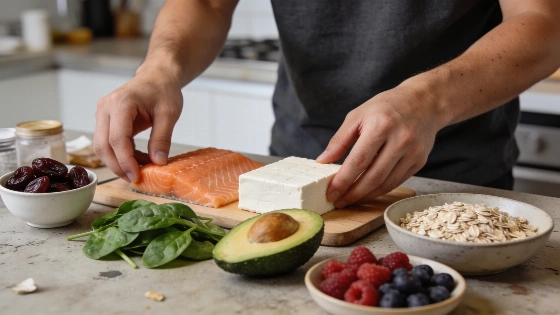
Four registered dietitians and one dietitian-parent describe ten foods they buy or eat regularly. The choices balance convenience with nutrients such as fiber and protein. Omega-3 fats also feature.
Some picks come from the pantry; others are fresh produce or fish. The common thread is flexibility. Canned salmon can replace fresh, while frozen berries work in smoothies. Spinach can go into sauces for anyone who would rather skip a salad.
The American Heart Association's October 12, 2026, overview of heart-healthy eating highlights vegetables and fruit. It also includes whole grains and legumes, along with fish and lean protein. Nuts and seeds round out the balanced eating pattern. The guidance says beginning a meal with vegetables or fruit can help promote fullness with fewer calories. Legumes offer another option, as do unsalted nuts and seeds, according to its heart-health guidance.
Fiber-rich staples can anchor a meal.
Beans and lentils provide plant protein and fiber at a relatively low cost, says registered dietitian Avery Zenker. About 93% of U.S. adults do not get enough fiber, and one cup of cooked beans provides about half of daily fiber recommendations, according to Zenker. Beans also supply potassium and iron. Folate and magnesium are among their other nutrients. Dried legumes are economical; canned versions save time. Draining and rinsing canned beans can reduce some sodium. Soaking dried beans overnight and cooking them in fresh water may help people who experience digestive discomfort.
Oats offer another affordable foundation. Registered dietitian Alexander LeRitz values them for their whole grains and fiber. Oats contain beta-glucan, a soluble fiber. A 2022 meta-analysis of 13 randomized controlled trials found that beta-glucan significantly lowered total and LDL cholesterol in adults with high cholesterol. Add fruit or nuts to oats, or try seeds with yogurt. High-protein milk can make breakfast more filling.
Registered dietitian Caroline Young eats peanut butter daily. It provides unsaturated fats and plant protein, along with fiber. Peanut butter is calorie-dense, but its combination of fat and protein may help with fullness when portions fit a person's needs. Check the ingredients for peanuts and, if desired, salt. Some products also contain added sugar or oils. Young pairs peanut butter with apple slices or stirs it into oatmeal. She also adds it to yogurt. For snack planning, a practical snack guide recommends first deciding what the snack needs to do, then checking the serving and nutrition facts.
Lauren Manaker eats four to six prunes daily as part of her bone-health routine. She likes their naturally sweet, jammy texture. Prunes contain vitamin K and potassium. They also provide boron. A 2026 review suggests daily prunes may have protective effects for bone health, particularly for postmenopausal women, though more research is needed. Their fiber and natural sugar alcohols can cause digestive discomfort, so start with about three and increase gradually. Add prunes to oatmeal or smoothies. They also work in trail mix and savory tagines.
Mixed berries provide fiber and vitamin C, along with polyphenols. Zenker favors frozen berries, which are just as nutritious as fresh, and points to their place in the Mediterranean and MIND diets. Polyphenols have been associated with a lower risk of cardiovascular disease. Associations have also been reported for type 2 diabetes and cognitive decline. Certain cancers are included in that research, but these links do not establish that berries prevent disease. To limit spoilage, keep fresh berries dry and wait to wash them until just before eating.
Proteins and produce should fit the routine.
Salmon supplies protein and the omega-3 fatty acids EPA and DHA. The American Heart Association recommends at least two servings of fish each week as part of a balanced, heart-healthy eating pattern. It especially recommends fatty fish such as salmon. A 2023 review and meta-analysis involving more than 1.4 million people found that eating about two to three servings of fish weekly was associated with lower risk of fatal and nonfatal cardiovascular disease. LeRitz roasts salmon with a little brown sugar over the skin. Grilling it on cedar planks is another option, as is keeping canned salmon on hand.
LeRitz has used tofu as a meat substitute since college. It is a complete protein and low in saturated fat. Tofu made with calcium sulfate can provide calcium, and tofu also supplies iron. Some products are fortified with vitamin B12, so check the label. LeRitz says current research does not support concerns that moderate soy intake lowers testosterone or meaningfully raises estrogen in men. Press tofu to remove moisture, cook it over high heat and season it well to improve its texture and flavor.
Dairy milk is a daily staple for Manaker. An eight-ounce glass provides eight grams of high-quality protein, along with calcium. It also contains vitamin D and phosphorus, nutrients important to bone health. Lactose-free milk provides the same key nutrients as regular dairy milk without lactose. Use it in cereal or soups. It also works in sauces and coffee, or in matcha and smoothies.
Avocado contributes monounsaturated fat and potassium. Half a large avocado provides roughly 10% of the Daily Value for potassium. Its fats help the body absorb vitamins A and D from a meal. They also help with absorption of vitamins E and K. Avocado intake has been linked with heart-health measures, including lower LDL cholesterol. To slow browning, add lemon or lime juice to the cut surface and store it tightly covered in the refrigerator. Avocado works in guacamole or a chicken wrap.
Spinach offers nitrates that the body converts into nitric oxide. That compound helps blood vessels relax and supports blood flow, including to the brain. Spinach also contains antioxidants and folate, a B vitamin important for brain function. If raw greens are unappealing, blend spinach into smoothies or pancake batter. Pasta sauce is another option. Wait to rinse it until just before use.
Nutrient amounts vary with food variety and serving size. Preparation method and brand matter, too. That is especially relevant for canned beans and fish, where sodium and fatty-acid content can differ between products. The USDA's FoodData Central provides nutrient data for foods. The label gives details for a particular packaged product.
The dietitians featured are Alexander LeRitz, MSc, RDN, CDN, CNSC; Lauren Manaker, MS, RDN, LDN, CLEC; Avery Zenker, MAN, RD; and Caroline Young, MS, RD, RYT. This information is for general education and is not a substitute for professional medical advice.