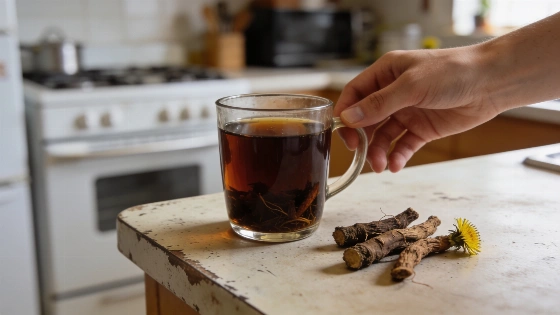
Amy Shapiro, lead nutritionist at ButcherBox, says she enjoys dandelion root tea hot or iced, including in the afternoon or evening. For her, it is a caffeine-free drink.
Label check: A tea's ingredient list can tell you whether it contains dandelion root, but it does not by itself establish a clinically effective dose. Preparation and product formulations can vary, so the label is not proof that a cup will relieve symptoms.
What the evidence says about digestion
Dandelion root has a history of traditional use for mild digestive complaints, including a feeling of fullness or slow digestion. The European Medicines Agency's herbal monograph describes that use as traditional, not as evidence of established clinical effectiveness. The U.S. National Center for Complementary and Integrative Health also says human research is limited. It has not found enough compelling evidence to confirm specific health benefits.
Claims Check: A small pilot study tested dandelion leaf extract, not root tea, and its urinary findings were not consistent across doses. It cannot substantiate broad promises that dandelion root tea reliably reduces water retention or bloating.
"Liver detox" is not an established benefit
Shapiro has pointed to dandelion's plant compounds and possible liver-support benefits. But laboratory findings do not prove that drinking the tea detoxifies the liver or treats a liver condition. The NCCIH overview emphasizes the limited human evidence. Treat a "detox" claim as something to check, not proof of an effect.
For shoppers comparing herbal teas or functional drink mixes, the useful details are what the product contains and what the label actually discloses. A named ingredient does not tell shoppers whether the product provides an active dose validated in clinical research. Proprietary blends on supplement labels can make it harder to see how much of each ingredient is present. Traditional use also does not establish a tested dosage or amount to take.
Dandelion root may not be suitable for everyone. The EMA advises medical consultation for people with gallstones or problems with bile flow. People with allergies to plants in the aster family should not assume the tea is automatically safe.
Persistent or worsening digestive symptoms warrant medical attention rather than reliance on an herbal drink.