
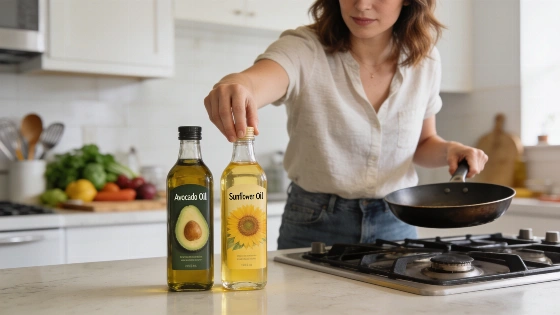
When it comes to choosing a cooking oil that actually delivers on health claims, the real decision happens at the stove-not in the marketing aisle. The American Heart Association draws a hard line: swap out saturated fats like butter for unsaturated plant oils. But which bottle deserves a permanent place on your counter-avocado oil or sunflower oil?
Both oils are pitched as heart-friendly, but their nutritional profiles are not identical. Avocado oil is loaded with monounsaturated fat, especially oleic acid, the same type found in olive oil. Sunflower oil, on the other hand, is higher in polyunsaturated fat, specifically omega-6 linoleic acid. The difference is not just academic-it shapes how each oil fits into your diet and your cooking routine.
Let's get specific. According to the USDA, a tablespoon of either oil clocks in at 146 calories and 14 grams of fat. But sunflower oil delivers nearly triple the vitamin E of avocado oil-9.59 mg versus 3.43 mg. That's a meaningful edge for anyone looking to boost antioxidant intake, though both oils are vitamin E sources.
Avocado oil's main claim to fame is its monounsaturated fat content. Research links these fats to improved LDL cholesterol and better cardiovascular health, especially when they replace saturated fats. The oil also contains vitamin E and small amounts of lutein, a plant compound tied to eye health. While most research focuses on whole avocados, the oil's fat profile closely mirrors olive oil, which is backed by decades of evidence.
Sunflower oil's reputation has taken a hit in some corners of the internet, mostly due to its use in ultra-processed foods. But the oil itself is not the villain. Its high polyunsaturated fat content, especially omega-6, can support heart health when it replaces saturated fat. Sunflower oil also brings vitamin E and unsaturated fats that help control chronic inflammation-an important factor in long-term disease risk.
For anyone who cooks at high temperatures, smoke point is not a trivial detail. Refined avocado oil can handle up to 500°F, making it a top pick for roasting, sautéing, and grilling. Sunflower oil also stands up to high heat and has a neutral flavor, making it a practical, budget-friendly choice for everyday cooking. High-oleic sunflower oil, bred for more monounsaturated fat, narrows the nutritional gap with avocado oil even further.
So which oil is actually healthier? The answer is less about the oil itself and more about what it replaces. Both avocado oil and sunflower oil qualify as unsaturated fats that can improve your diet when they take the place of butter or lard. If you want a nutritional profile closest to olive oil, avocado oil is the better match. If you need an affordable, neutral oil for high-heat cooking, sunflower oil is hard to beat. And if vitamin E is your priority, sunflower oil wins on numbers alone.
Here's the reality: the healthiest oil is the one you'll consistently use instead of saturated fats, not the one with the trendiest label. Both avocado oil and sunflower oil can play a role in a balanced kitchen. The real mistake is obsessing over the "perfect" oil while ignoring the bigger picture-what you eat most often, and what you're replacing. Nutrition is about patterns, not perfection, and the smartest move is to choose an oil that fits your cooking style, your budget, and your health goals without falling for internet fearmongering or marketing hype.