
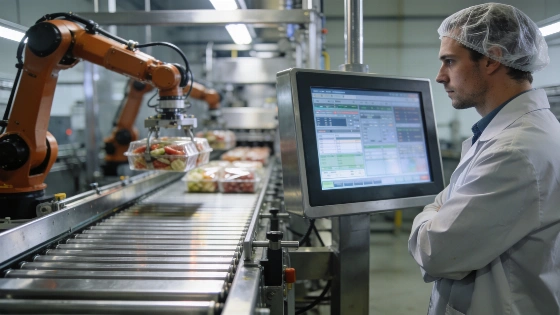
Warehouse floors at companies like PepsiCo look different these days. Digital twins and AI agents now coordinate production lines, simulating entire facilities to spot inefficiencies and adjust supply chains on the fly. This means fewer slowdowns, faster deliveries, and a logistics network that can adapt before problems arise. These changes also help companies source ingredients more consistently and keep tighter control over product quality, which matters for the accuracy of Supplement Facts panels and allergen disclosures.
AI-driven formulation platforms are enabling brands to disclose more precise protein sources and active ingredient dosages, reducing reliance on vague proprietary blends and improving label transparency.
Tastewise takes a different approach, turning food data into a resource for brands trying to keep up with changing consumer tastes. By analyzing everything from social media to retail receipts, their AI spots new trends and hidden opportunities, helping companies launch the next popular flavor before competitors catch on. In the nutrition shake category, this leads to faster rollouts of trending flavors (like matcha or birthday cake) and functional claims (such as "immune support" or "gut health"). It also puts more pressure on brands to back up their claims and keep ingredient lists transparent.
Nutrition research, once slow and labor-intensive, is moving faster thanks to platforms like Brightseed's Forager AI. By mapping bioactive compounds in thousands of plants, Brightseed helps R&D teams find ingredients with real health benefits more quickly. This shows up on labels as more products highlighting specific phytonutrients, prebiotics, or adaptogens. Still, it's important to check for disclosed dosages and third-party certifications.
Claims Check: The FDA requires that functional claims such as 'immune support' or 'gut health' on nutrition shakes and protein powders be substantiated by credible scientific evidence and not mislead consumers. Always verify that the claimed benefits are supported by disclosed ingredient dosages and, where possible, peer-reviewed clinical studies.
Food waste, a long-standing problem in the industry, is getting new attention. Winnow's computer vision system monitors commercial kitchens, identifying discarded food in real time. The data reveals exactly what gets thrown out and why, helping chefs and managers cut costs and improve sustainability. For nutrition brands, this can mean more efficient ingredient use and possibly lower prices for consumers.
Nestlé is also using AI to track food waste and improve how surplus food is redistributed. By applying machine learning, the company is working to reduce losses and make operations more efficient. This can help keep supply chains stable for key ingredients like pea protein, chicory root fiber, or natural flavors, reducing the need for mid-year reformulations or label changes.
On the sensory side, Analytical Flavor Systems uses Gastrograph AI to model how flavor, aroma, and texture interact. Food companies use these insights to predict how different groups will respond to new products, lowering the risk of failed launches and tailoring recipes to local tastes. For shoppers, this can mean more targeted flavor releases and, ideally, fewer artificial flavors or masking agents on the label.
Danone is focusing on predictive modeling and AI-driven research to understand changing consumer needs, especially around gut health. Their approach is less about chasing trends and more about anticipating scientific advances that will shape future products. For consumers, it's still important to look past front-of-pack claims and check the Supplement Facts for details like prebiotic fiber content, probiotic strains, and clinical dosages.
Artificial intelligence is now central to how the food industry operates. Companies treating AI as a side project are already falling behind. The leaders are those willing to let algorithms challenge old habits, find inefficiencies, and even guide the next big move. In an industry known for slow change, these nine companies show that data-driven disruption is not only possible, but already underway.