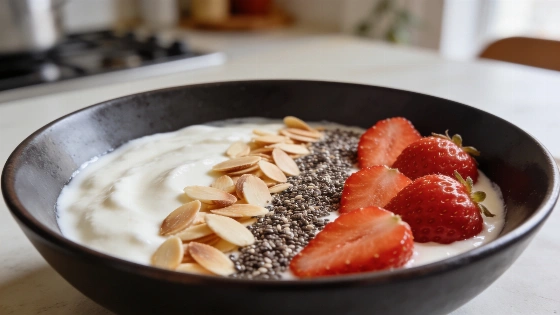
Forget the old advice about just drinking more milk. Dr. Reema Patel, MD, medical director at the Diabetes and Endocrinology Center of Old Bridge, says breakfast can do more for your bones than most people think. Her go-to meal? Plain, fortified Greek yogurt with sliced almonds, chia seeds, and fresh strawberries. This mix hits the nutrients your bones need to stay strong.
Why does breakfast matter for bone health? Dr. Patel points to research showing that eating in the morning slows down bone breakdown, which spikes overnight. That first meal is also your best shot at getting enough calcium, vitamin D, and protein-nutrients your bones can't do without.
A typical 100g serving of plain Greek yogurt provides about 100-111 mg calcium and 10-13g protein, but this covers only a fraction of the adult daily calcium requirement (1,000-1,200 mg).
The nutrient blueprint for a bone-healthy breakfast
Dr. Patel's bowl isn't just tasty. Greek yogurt packs in calcium and high-quality protein-protein makes up about half of your bone's volume. Almonds add magnesium, which helps build bone and is tied to bone density and fracture risk. Chia seeds bring plant-based calcium, phosphorus, magnesium, iron, and zinc. Strawberries add vitamin C and antioxidants that help bones rebuild.
Her advice is clear: aim for 300 mg of calcium at breakfast (adults need 1,000-1,200 mg a day, best absorbed in amounts of 500 mg or less), 15-20 mcg (600-800 IU) of vitamin D, and 20-30 grams of protein. These numbers aren't guesses-they're what your bones need to stay healthy. The NIH Office of Dietary Supplements says calcium, vitamin D, and protein are the foundation for bone health. Protein also helps keep muscle mass up and lowers the risk of falls.
Beyond dairy: Smarter ways to boost your bones
Dr. Patel doesn't stop at yogurt. She tells patients to rethink the usual breakfast. Fruits and vegetables, often skipped, are full of potassium, magnesium, and vitamin K. These nutrients help balance acids that could otherwise pull calcium from your bones. A plate loaded with colorful produce is a direct way to protect your bones.
Supplements can help, but Dr. Patel is direct: "Getting your nutrients from real food is always the preferred route." Whole foods give you a mix of vitamins, minerals, and fiber that pills can't match. She tells patients to fill their plates with nutrient-rich foods first, then use supplements only if there's still a gap.
Claims Check: While many products highlight calcium or vitamin D content for bone health, regulatory authorities such as the FDA require that any structure/function claims be supported by substantial scientific evidence and accurate labeling. Consumers should verify that the Supplement Facts panel discloses actual dosages and not just marketing buzzwords.
One thing to watch out for? Too much salt. Dr. Patel warns that sodium and calcium use the same pathway in the kidneys, so eating a lot of salt can pull calcium out of your body. Her tip: skip the salt shaker, cut back on processed foods, and use herbs and spices for flavor instead.
How this changes your morning routine
Dr. Patel's approach starts with the fact that bone is living tissue, always breaking down and rebuilding under hormone control. She often checks for hormone problems behind bone loss, like drops in estrogen after menopause or issues with parathyroid and vitamin D. Her breakfast plan is a hands-on way to give your bones what they need every day.
If you're curious about how breakfast can help other parts of your health, a recent feature looked at fruit-heavy breakfasts that help manage blood sugar, showing that smart choices can pay off in more ways than one.
Dr. Patel's advice is simple and practical. She doesn't make vague promises. Instead, she gives a clear plan: focus on calcium, vitamin D, and protein at breakfast, add fruits and vegetables, and keep salt low. This is real, evidence-based advice that can actually help your bones. If you want to build a stronger skeleton, the message is simple-what you eat for breakfast matters, and the right bowl can set your bones up for the day ahead.