A six-month trial published in 2007 found no statistically significant change in LDL or total cholesterol among adults who took garlic products. Researchers also found no significant change in other lipid measures.
That result fits a mixed body of research. The National Center for Complementary and Integrative Health (NCCIH) says garlic supplements may lower total and LDL cholesterol to a small extent, while findings on cinnamon remain inconsistent.
The clearest role for either spice is in everyday meals.
Dallas-based dietitian and diabetes educator Whitney Stuart, MS, RDN, CDCES, told Verywell she would choose garlic as a cholesterol-conscious seasoning. Research on garlic and garlic supplements suggests they may help lower LDL, though results vary by product and study.
In the 2007 trial, participants with moderately elevated LDL took raw garlic or one of two commercial garlic preparations six days a week. None of the groups had a statistically significant change in LDL or total cholesterol, and other lipid measures also showed no significant change. Later reviews report mixed results, with any reduction described as small. Garlic powder and extracts differ from aged preparations; raw garlic is another distinct form. The trial is indexed by PubMed.
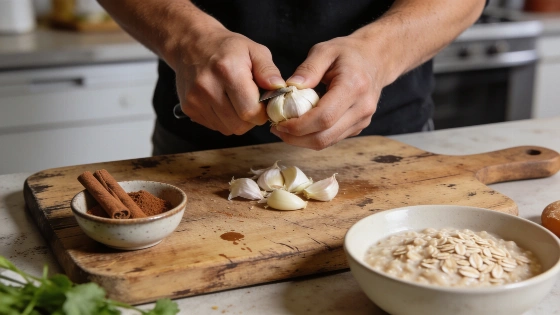
Chop or crush garlic, then let it sit for about 10 minutes before cooking.
That pause gives allicin and other sulfur compounds time to form, Stuart explained. Heat can deactivate the enzyme involved in producing allicin. These compounds may slow cholesterol production in the liver. Garlic's antioxidant effects may also help protect LDL from oxidation, a process involved in plaque buildup in arteries.
Food amounts of garlic differ from concentrated supplements. The NCCIH garlic guidance notes possible side effects, including breath or body odor and abdominal discomfort. Gas or nausea can also occur, and allergic reactions are possible. Supplements can raise bleeding risk, particularly for people taking blood-thinning medicines. Anyone considering them should consult a health professional.
Cinnamon's possible benefit appears modest.
New Jersey-based dietitian Keri Gans, MS, RDN, CDN, told Verywell that cinnamon may affect how the body processes fats and cholesterol. Some studies report reductions in total and LDL cholesterol, particularly among people with type 2 diabetes, but results are inconsistent. A 2020 review of 15 trials found modest changes in LDL and blood-sugar measures. Most studies lasted less than three months, and many enrolled fewer than 100 participants. The findings do not establish a lasting cholesterol benefit for healthy people.
The NCCIH describes research on cinnamon for diabetes as mixed. Cinnamon is not an established cholesterol treatment. Its cinnamon overview also distinguishes culinary use from taking supplements for a health effect.
Gans suggested adding cinnamon to oatmeal or yogurt, or stirring it into coffee. Smoothies are another option. It can also go into chili or roasted vegetables, and into spice rubs. Cinnamon compounds such as cinnamaldehyde and polyphenols have been linked with possible effects on inflammation and blood sugar. Those potential benefits do not make cinnamon a treatment.
Garlic can season beans or lentils, and it works with vegetables. It also pairs with whole grains or salmon. Try sautéing it with leafy greens in olive oil, mixing it into vinaigrette, or stirring it into soup. Garlic powder works as a seasoning too. Shake Nutrition's blood pressure guide discusses how everyday foods fit into an overall eating pattern.
Guidance from the American Heart Association and American College of Cardiology emphasizes a sustainable eating pattern with less saturated fat and enough fiber, rather than relying on a single food or spice. Neither cinnamon nor garlic should replace medication or other recommended cholesterol management.