
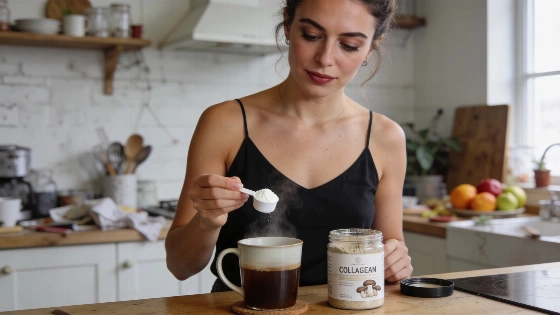
Before adding collagen or lion's mane powder to your morning coffee, it's worth asking whether these trendy supplements actually deliver on their promises. Nutritionist Rhiannon Lambert, author of The Fibre Formula, takes a closer look at what the research really says-and what's still uncertain-about these popular coffee add-ins.
Most collagen and mushroom coffee blends list proprietary blends or generic ingredient names, making it difficult for shoppers to verify actual dosages or compare label transparency across brands.
Collagen in coffee: convenient, but not a miracle
Collagen is the most common protein in the body, supporting skin, bones, cartilage, and connective tissue. Our bodies make less collagen as we age-about 1% less each year from our late 20s. That's why collagen supplements are everywhere, promising to help skin, joints, hair, and nails. Lambert says adding collagen to coffee is mostly about convenience: "There's nothing particularly special about putting it in coffee-the coffee is really just the vehicle!"
So what does the research show? Some studies suggest hydrolyzed collagen might slightly improve skin hydration and elasticity, but results are mixed. A recent review found some improvements in skin hydration and elasticity compared to placebo, but the studies were small and varied. The best evidence so far is for joint health, especially in people with osteoarthritis, where collagen supplements may help with pain and function. Still, collagen can't replace a balanced diet with enough protein and vitamin C, and shoppers should be skeptical of miracle claims.
Not all collagen powders are the same. Many use proprietary blends or don't specify the type and amount of collagen per serving, making it hard to compare products. If you want extra assurance, look for third-party certifications from groups like NSF International to confirm label accuracy and ingredient quality.
Lion's mane, reishi, and cordyceps mushrooms are now common in coffee blends, often marketed for focus or mood. Lion's mane is especially hyped for memory and concentration. But human studies are still limited. The most cited clinical trial-a Japanese study in adults with mild cognitive impairment-used 3,000 mg of lion's mane extract daily for 16 weeks and found some cognitive improvements. But these results are tied to specific doses and extracts, not the small amounts of generic "mushroom powder" found in most coffee blends. Most products contain much less, and the actual amount of active compounds like erinacine A is rarely listed or independently checked.
Claims Check: Regulatory reviews have found that many functional mushroom and nootropic blends, including those with lion's mane or reishi, often lack sufficient human evidence to support claims like 'clear-headed' or 'calm and collected.' Clinical trials on lion's mane show potential cognitive benefits only at high, standardized doses not typically found in coffee products.
Reishi mushroom, another popular option, has some evidence for improving sleep quality in people with primary insomnia, according to a 2023 meta-analysis. But these effects are specific to certain groups and doses, and don't apply to the small amounts in most coffee blends. Regulatory agencies like the U.S. FDA require strong evidence for supplement claims, and many mushroom-based claims don't meet that standard.
Label transparency is a recurring problem. Until recently, even independent labs struggled to verify the potency or authenticity of lion's mane supplements, since reference standards for key compounds weren't widely available. This makes it important to choose products with clear Supplement Facts panels and, if possible, third-party testing.
Collagen vs. mushroom powders: is either worth it?
Trying to pick a "winner" between collagen and mushroom powders misses the point. They're marketed for different reasons-joint support versus cognitive boost-and the evidence for both is limited. If you have joint discomfort, collagen has more human research behind it than functional mushrooms. For brain health, the claims around lion's mane are ahead of the science. In India and other regulated markets, only certain mushroom ingredients are allowed in supplements, as defined by FSSAI regulations, so it's important to check ingredients carefully.
Lambert stresses that the basics matter most: "We have a much stronger body of evidence showing that our wider lifestyle-eating a varied and balanced diet, moving regularly, prioritizing sleep and managing stress-can have a meaningful impact on our physical and cognitive health." If your diet already covers your nutritional needs, extra supplements may not add much.
For a practical take on pre-workout nutrition, it's worth noting that coffee itself is a simple, cost-effective option, as reported earlier.
What actually matters for your morning routine
Lambert's advice is straightforward: focus on the basics before spending money on trendy powders. Coffee can be part of a healthy diet, but pairing it with a balanced breakfast-protein, fiber, and fruit or vegetables-will do more for your nutrition than any supplement. If you enjoy collagen or mushroom coffee, there's no harm in having it. But you're not missing out if you skip the trend. Supplements and functional ingredients are just extras; the real foundation is a balanced diet. For most people, whole foods are a better investment than powders.