
At The Center for Discovery in Harris, New York, Cornell students spent eight weeks observing meals and daily care routines. Their work covered family feeding needs, eating behavior and adaptive apparel.
The projects did not establish new health outcomes. They also did not evaluate nutrition shakes, protein powders or other packaged products. Students worked with disabled people, caregivers and staff to study practical challenges that can be missed when care is viewed only through a clinical lens.
The scope was specific.
The reporting identifies research questions and care observations, not product-label measurements: it gives no shake or powder serving sizes, protein grams, calories, sweetener amounts or clinical results to compare.
Nutrition research starts with families and mealtimes
Joelle Lee '29 worked with Prof. Angela Odoms-Young, M.S. '94 Ph.D. '99, on what parents need to create healthy eating environments at home for children with autism spectrum disorder. Lee said she focused on families' struggles with feeding and nutrition, not only on the child.
Ali Shiekh '28 and Prof. Paige Cunningham studied whether people with autism spectrum disorder respond to satiety, or fullness, signals in the same way. They also asked how those signals might relate to food intake and weight gain. The project raised a research question. It did not report that satiety signaling differs or causes weight gain.
Shiekh helped explain the study to parents and recruit participants. With staff support, he filmed mealtimes. He learned sign language for "more," "stop" and "all done." His literature review covered research on medications, food and behavior, including GLP-1s, metformin, sucralose and ultra-processed foods. The review does not mean those substances were tested as interventions in this project.
For shoppers, a research question is not the same as a demonstrated outcome. This report gives no Supplement Facts panel, ingredient doses, trial results or product comparison. It cannot show whether a meal replacement or protein powder would meet any need described here. Check a packaged drink's serving size, protein source and amount, calories, added sugars, sweeteners and allergen statement. A "satiety" or "gut health" phrase is not proof.
Lee also recorded meals and noted eating patterns, chewing, swallowing and signs of preference or difficulty. In interviews, caregivers described children's habits and challenges. Lee then observed some of the children herself. "When I observed certain behaviors in person, I could often recognize and connect them to things their parents had described to me earlier," Lee said.
Adaptive clothing designed around daily routines
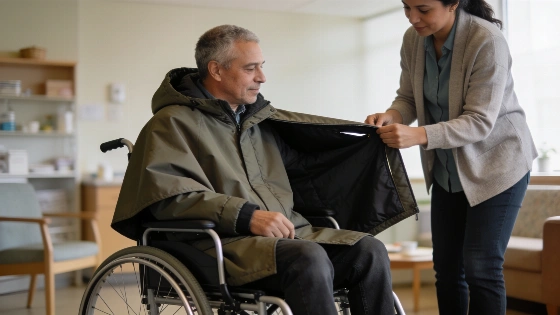
Alan Van '28 worked with Prof. Heeju Park on apparel for people with cerebral palsy. He watched direct care staff and occupational therapists help residents get dressed and move between locations. Van then developed a Hybrid Poncho-Jacket. Wide side openings and underarm zippers, plus zippered or magnetic closures, addressed observed needs such as muscle tone, range of motion, positioning and wheelchair equipment.
Staff and occupational therapists assessed each prototype. Van revised the design based on their feedback. The contemporary styling was meant to avoid a clinical look. Van said the finished garment was quicker to put on and take off than a regular jacket. When he gave it to the adult who had worked with him, the man wheeled over and gave Van a high five with his foot.
That moment shows the project's aim: design an item around a person's routine, with feedback from people who provide and receive care. It is different from a nutrition label, but the consumer question is familiar. What need is the product meant to meet? What evidence supports that purpose?
A research partnership grounded in care
The Center for Discovery says it serves more than 1,700 adults and children in residential and community programs. Nutrition services are part of a wider care model that includes medical care and education. Cornell's School of Human Ecology and the center have an established partnership that connects student research with disability care. This internship was part of that work.
Each undergraduate in the internship works with a Cornell faculty mentor and a mentor from the center. Jennifer Franck, chief of the department of nourishment arts and a registered dietitian, said the center's medically complex population has "a heightened need for good nutrition." The center says its nutrition science supports general wellness as well as therapeutic care. Interns can work with farmers, share recipes and shadow medical staff.
For readers comparing packaged drinks with everyday foods, USDA FoodData Central offers a reference database for food composition. It does not replace checking a product's own Nutrition Facts or Supplement Facts panel. Price per serving, grams of protein per serving and added sugars can help with comparisons. This internship report provides none of those product metrics and does not endorse a shake or supplement.
The program focused on daily routines: what happens at the table, what families need and how clothing fits a person's movement and equipment. The nutrition projects examined mealtime routines, family feeding needs, satiety signaling and caregiver challenges around autism-related eating behavior. They did not establish clinical outcomes. The available reporting identified no later institutional results or post-project publication.
The work offers a starting point for further research. It is not evidence for a product claim.