
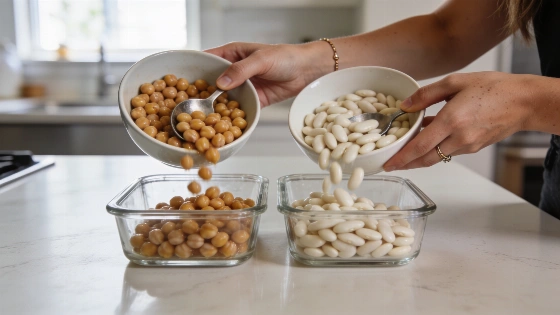
Most Americans don't get enough fiber-about 94% fall short of the daily recommendations. That's more than just a statistic; it's a missed chance for better heart health, steadier blood sugar, and feeling full after meals. The fix could be as simple as adding more beans to your plate. But not all beans are the same, and two of the most popular-chickpeas and white beans-are often compared for their fiber punch.
A 1/2-cup serving of cooked chickpeas provides about 6.8 grams of fiber and 7.9 grams of protein, while white beans deliver 5.7 grams of fiber and 5.7-6.3 grams of protein per 100 grams. These metrics are crucial for evaluating satiety and nutritional density.
For anyone reading labels or shopping for shakes, the U.S. FDA sets the Daily Value for fiber at 28 grams for adults and kids over four. Nutrition guidelines often recommend 25 grams per day for women and 38 grams for men, or about 14 grams per 1,000 calories. Most people fall well below these targets, which is why fiber is considered a "nutrient of public health concern" in the U.S. It's also why brands highlight fiber on packaging and in ads.
Chickpeas, also called garbanzo beans, are a staple in many cuisines. One cup gives you 15 grams of plant protein and those 13 grams of fiber. This combo helps you feel full, and research links regular bean eating to lower body fat and smaller waistlines in women. Patricia Bannan, M.S., RDN, says the protein and fiber in chickpeas make meals more satisfying and may help cut down on snacking.
Claims Check: While many brands market beans and bean-based powders for 'gut health' or 'digestive support,' the FDA requires that such claims be substantiated by clinical evidence and not imply disease treatment. Soluble fiber from beans, including chickpeas and white beans, is recognized for supporting digestive health, but product labels must accurately reflect fiber content and avoid unsubstantiated health promises.
Chickpeas are also versatile. Hummus is just one option-they work in salads, curries, and even as roasted snacks. Many brands now sell roasted chickpeas as a portable, high-fiber snack for busy days.
Why white beans still hold their own
White beans-like cannellini, great northern, or navy-aren't far behind. A cup of cooked white beans has 17 grams of protein and 11 grams of fiber, with both soluble and insoluble types that help with fullness, heart health, and digestion. Bannan points out that white beans also provide potassium, iron, magnesium, and calcium, all important for fluid balance and blood pressure.
White beans are especially good for blood sugar control. Their fiber, along with protein and healthy fats, slows down how quickly glucose enters the bloodstream, leading to steadier blood sugar after meals. Researchers are also looking at compounds in white beans for possible benefits in gut and metabolic health, including support for people with type 2 diabetes.
In the kitchen, white beans have a mild flavor and creamy texture that blend easily into soups, stews, salads, and dips. Cording calls them the "gateway bean" for anyone new to legumes who doesn't want to change the taste of familiar recipes.
How to pick the right bean for you
So which bean comes out on top? Chickpeas have a slight fiber lead, but both are excellent choices. Bannan puts it simply: "The best bean for a high-fiber diet is really the one you enjoy and will eat consistently." Cording adds that variety matters-chickpeas might be your pick for roasting or soups, while white beans work well in creamy dips or baked goods. White beans also have more iron and nearly twice the potassium of chickpeas, so switching between the two covers more nutritional ground.
If you want to close the fiber gap, adding just half a cup of beans a day-chickpeas, white beans, or both-can make a real difference. Keeping canned beans on hand makes it easier to turn this into a daily habit.
The bottom line: It's less about finding the "best" bean and more about making beans a regular part of your meals. Chickpeas may win on fiber, but white beans have their own strengths, and both are a big step up from what most Americans eat now. For better heart health, gut health, and lasting fullness, keep both chickpeas and white beans in your pantry-and actually use them. That's how nutrition advice turns into real results.
If you're focused on labels, always check the Nutrition Facts panel for fiber per serving, and be cautious with powdered products that use vague blends. For more on fiber types and their health roles, see the SW Labs fiber and gut health summary. For a deeper look at the U.S. fiber gap, the Expert Nutrition Compass has a full overview.