
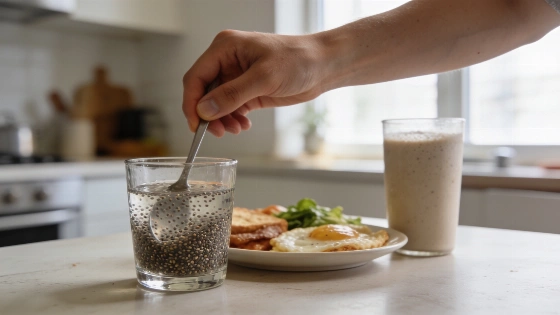
Water after waking adds fluid, not a blood-sugar treatment. For people with diabetes, chronic high blood glucose and glycemic variability matter. Hydration and breakfast choices can support management, but neither controls blood sugar on its own. Look at what a drink adds, such as hydration, protein, fiber or less added sugar, and what else is on the plate.
Not everyone needs to eat in the morning, as this breakfast evidence guide explains. If you do eat breakfast, judge a drink as part of the meal, not as a fix for blood sugar. For packaged shakes, check serving size, calories, protein and added sugars on the Nutrition Facts panel. With powders, check the scoop weight and whether the listed amounts apply to a full serving.
A common chia drink serving is 2 tablespoons of seeds soaked in 1/2 cup of milk or another liquid for at least 30 minutes. The resulting thicker drink adds fiber and some protein, but the full recipe-not the chia alone-determines its calories and overall nutritional value.
Start with hydration or protein
1. Water. It is a practical first choice after several hours without fluids. Hydration supports overall health. Mild dehydration may make glucose management more difficult, but water does not directly lower blood sugar. Add lemon, cucumber or mint for flavor without sweetening the drink.
2. A protein shake. Milk, Greek yogurt, unsweetened soy milk or protein powder can add protein, depending on the recipe. Powder alone is not automatically a complete breakfast. Check protein and calories per serving, then consider whether the shake has fiber and other nutrients you might otherwise get from food. For whey or plant-based powders, check the protein source, allergen statement, added sweeteners and serving weight. A high protein-to-calorie ratio may suit some goals, but it does not prove the product is a meal replacement.
3. Kefir. It provides protein and beneficial bacteria. Evidence that fermented foods reliably improve blood-glucose control remains limited and mixed. Some studies in people with metabolic concerns have reported changes in certain inflammatory or cardiometabolic markers. That does not prove kefir treats diabetes. Choose plain varieties when possible, and compare labels because flavored kefir can contain added sugars.
4. Cow's milk. Milk provides protein and carbohydrate. Its protein and fat may affect digestion and the pace of the post-meal response, but milk should not be described as a way to lower blood sugar. Plain milk can fit into a balanced breakfast. Check serving size and added sugars in flavored versions.
5. Unsweetened soy milk. Among many plant-based milks, it is a higher-protein option. If the label confirms it is unsweetened, it has no added sugar. Many products are fortified with calcium and vitamin D, but formulations vary. Compare protein per serving and check for allergens. A plant-based label does not tell you how much protein is in the carton.
6. Chia drink or smoothie. Chia seeds provide fiber and some protein. These may slow digestion and support a more gradual rise in post-meal glucose. A PubMed search on chia and glucose can help readers explore the clinical literature. It does not mean every chia drink has a proven effect. Soak the seeds before drinking. The 2-tablespoon serving described above thickens in about 1/2 cup of liquid after at least 30 minutes. A smoothie's fruit, juice, sweeteners and total portion matter, too.
Keep simple drinks unsweetened
7. Green tea. Unsweetened green tea contains catechins, plant compounds studied for possible health effects. The evidence does not make green tea a treatment for high blood sugar. Its caffeine can provide a morning lift. Sugar or honey adds carbohydrate.
8. Black coffee. Observational research has linked coffee drinking with a lower risk of type 2 diabetes. That does not prove coffee prevents the condition. If you want to limit added sugar, watch for syrups, sweetened creamers and toppings. They can add sugar quickly. Caffeine affects people differently.
9. Cinnamon tea. Unsweetened cinnamon tea offers a caffeine-free alternative to sweetened drinks. Research on cinnamon and blood glucose is not conclusive enough to treat the tea as a glucose-lowering remedy. Prepared without sweeteners, its practical value is flavor without added sugar.
10. Vegetable juice. It can provide vitamins and minerals and may contain less sugar than fruit juice. Products differ, so check serving size, sodium and added sugars. Juicing removes much of the fiber and fullness of whole vegetables. A label that says "green" or "detox" does not prove a health effect.
Compare the label, not just the claims
For ready-to-drink shakes and meal replacements, compare calories, protein, fiber and added sugars per bottle. Check whether the bottle holds more than one listed serving. For powders, divide the container price by the number of servings to estimate the cost per serving. Then compare that figure with scoop size and protein per serving. Whey, casein, soy and pea proteins differ in composition and suitability. Check for dairy, soy, gluten and other allergens. "Vegan," "keto" and "non-GMO" describe product attributes, not guaranteed effects on glucose.
Ingredient lists can show what a formula contains. Inulin, chicory root, psyllium or acacia may add fiber. Xanthan or guar gum may thicken a shake. Stevia, monk fruit, sucralose, erythritol and other sugar alcohols differ in their properties and may affect taste or digestive comfort in different ways. "Sugar-free" does not necessarily mean carbohydrate-free, and a sweetener may not affect everyone the same way. Check total carbohydrate and added sugars, along with the ingredients.
Be wary of proprietary blends. A label may give the blend's total weight but hide the amount of each component. That makes it hard to compare doses or judge whether claims such as "superfood," "clean energy," "immune support" or "metabolism booster" rest on meaningful amounts and relevant evidence. Full ingredient amounts make comparisons easier. They do not prove a product works.
No drink on this list guarantees steady blood sugar. Choose water or an unsweetened beverage if it suits you. Consider the drink's protein and fiber, and pair it with a balanced breakfast. For questions about diabetes or medication, follow advice from your healthcare professional rather than relying on a beverage or supplement claim.