
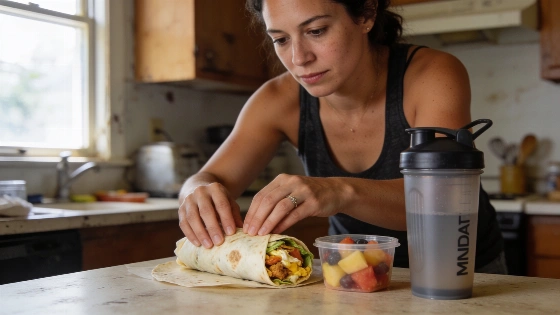
About one in four Americans regularly skips breakfast. For people who do want to eat in the morning, convenience and appetite matter more than following a fixed schedule.
Intermountain Health registered dietitians say quick, balanced options can support energy and focus. The right routine depends on the person.
A smoothie or protein shake is not automatically a complete meal. Compare serving size, calories, protein, fiber and added sugars on the label, and check whether the product is a protein supplement or intended to replace a meal.
What breakfast research can and cannot say
A 2019 systematic review looked at six prospective studies involving 96,175 people and 4,935 cases of type 2 diabetes. People who regularly skipped breakfast had a higher relative risk: RR 1.22 after adjustment for BMI and RR 1.33 before adjustment. The figures show an association, not a 22% increase in an individual's absolute risk. They also do not prove that skipping breakfast causes diabetes, as the review on PubMed notes.
Carly Alba, a registered dietitian nutritionist with Intermountain Health, says breakfast offers a chance to replenish energy after hours without food. A meal with protein, fiber and healthy fats may help people feel focused and productive. That is a potential benefit, not a guarantee for everyone.
Claims Check: In a review of 13 randomized trials, adding breakfast did not lead to weight loss; breakfast eaters consumed about 260 more calories per day and weighed about 0.44 kg more on average. The trials were generally short and low quality, so these results do not establish that breakfast causes weight gain or settle its long-term effects.
The evidence does not support breakfast as a universal way to control weight. Nor does it show that skipping breakfast is a reliable way to lose weight. Observational research has linked regular breakfast skipping with overweight and obesity, but that link does not prove cause and effect. Routines, overall diet and other factors may differ between groups.
Build a portable meal that works for you
A satisfying breakfast can combine protein, fiber-rich carbohydrates and healthy fats. Try overnight oats with milk or yogurt, fruit and nuts. Greek yogurt with berries and granola is another option. Whole-grain toast with peanut butter and banana works, too. So do hard-boiled eggs with fruit.
Make egg, vegetable, bean and cheese breakfast burritos in batches, then freeze them for reheating. A smoothie with milk, Greek yogurt, fruit, nut butter and spinach is easy to take along. Cottage cheese with fruit, tomatoes or whole-grain crackers can also make a quick meal.
Ready-to-drink shakes and powders can save time. Check what each product is designed to provide. A protein powder may add protein without supplying the calories, fiber or wider range of nutrients found in a meal. Compare serving size in grams, calories, protein, fiber and added sugars.
Check the ingredient list for the protein source, such as whey, soy or pea, and for relevant allergens. If you have preferences or sensitivities, look for sweeteners such as stevia, sucralose or sugar alcohols. A front-label claim such as gut health, clean energy or metabolism support does not prove an effect. Look for listed ingredients and amounts instead of relying on a proprietary blend or vague promise.
Labels tell more. To compare prices, work out the cost per serving and check how many servings the package contains. Scoop sizes can differ, so the number of scoops or the headline protein amount may not tell you which product is better value. Read the Nutrition Facts or Supplement Facts panel and the full ingredient list. Certifications and claims such as vegan or non-GMO do not replace those checks.
Convenient choices can help with other meals, too. Canned sardines retain omega-3 fats and provide protein and calcium. The packing liquid and sauces can affect label details such as sodium and sugar.
If you are not hungry when you wake up, Alba advises paying attention to your hunger cues. Some people prefer to eat within an hour; others wait longer. On hectic mornings, her practical suggestion is to start small. Yogurt, fruit or a protein smoothie may be easier to manage.
Not everyone needs to eat breakfast at a set time. Choose a meal or shake that fits your appetite and schedule. Check packaged options by their serving size, ingredients and nutrition panel, not by marketing language alone. Breakfast can fit into a routine, but research does not make it a universal rule or a personal health prediction.