
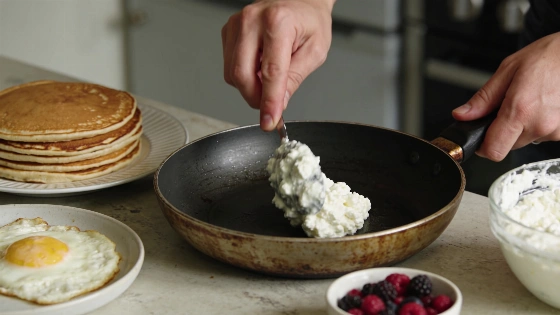
One of the books featured is High-Protein Cottage Cheese Breakfast Cookbook: From Vintage to Viral. Its description promises more than 100 recipes, from pancakes and flatbreads to pizzas and cottage-cheese hollandaise. But a cookbook title or recipe description cannot tell you how much protein is in a serving.
Available search results did not independently confirm the book's publication details or its reported Amazon review count and 4.9-star rating. Those figures remain unverified.
Choose a book by the kind of breakfast you want
The available results did not independently confirm the book's publication details, its reported link to Friends & Family bakery in Los Angeles, or the specific flour advice attributed to it. Check a publisher listing or the book itself.
Claims Check: A recipe title or ingredient list cannot establish the protein in a finished serving; the portion and full recipe determine the numbers. For packaged supplements, FDA distinguishes structure/function claims from disease-treatment claims, and marketing language alone does not prove a clinical benefit.
Check the recipe count and contents against a publisher or library catalog. That is the safer route.
For brunch and make-ahead variety
Ham El-Waylly's Hello, Home Cooking: Do-Able Dishes for Every Day is described as a broader cookbook with egg dishes and recipes suited to brunch. An episode listing identifies El-Waylly as a New York-based chef and mentions the cookbook. That offers limited confirmation of the connection, but it does not verify the book's detailed contents, recipe counts or reader ratings.
Descriptions of dishes such as maple-glazed basturma bacon and a pita-based take on Cinnamon Toast Crunch should be treated as reported details, not independently checked facts.
To assess a recipe's nutrition, check its serving size and ingredients. Words such as "high-protein" or "healthy" are not enough. USDA FoodData Central offers reference nutrient values for individual foods, but a recipe's totals depend on the brands, amounts and portions used.
If you add a packaged shake or protein powder, check its Nutrition Facts or Supplement Facts panel. Look at serving size, protein grams, calories, added sugars and allergens. Compare the price per serving, too. Check whether the exact ingredient amounts are listed or hidden in a proprietary blend. USDA FoodData Central provides food-composition data for ingredient-level comparisons.
Planning breakfast ahead can help on busy mornings. Baking in advance or choosing dishes that keep well may make the routine easier. Readers looking for make-ahead dishes can also browse more make-ahead breakfast ideas.
The five books offer different approaches: cottage cheese, eggs, baking, seasonal ingredients and brunch. Several bibliographic and promotional details could not be independently verified in the available results. Before buying, check a publisher or library listing and preview the recipes.
For nutrition decisions, assess the actual ingredients and serving size. A cookbook theme cannot replace a disclosed nutrient panel or evidence for a product claim.