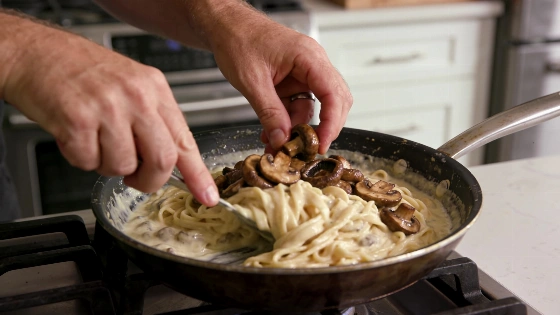
A crowded skillet leaves mushrooms steaming instead of browning. Give them a hot pan and room to cook, and their savory flavor can carry a quick dinner or a cozy weekend dish.
In the United States, National Mushroom Day falls on October 15. The informal food-themed observance brings restaurant promotions and educational events. Mellow Mushroom, for example, has promoted a 25% discount on a selected pizza. Georgia State Parks has organized mushroom walks and talks. Button mushrooms and cremini are versatile choices; portobellos have a meatier texture. Shiitake and oyster mushrooms work well in dishes that call for a more pronounced flavor. Nutritional profiles vary by type and preparation. Per 100 g, cooked mushrooms without added fat provide about 354 mg of potassium. They also contain 12 mcg of selenium, 4 mg of niacin and 18 mcg of folate, according to FoodNutrients. Oil, cream or cheese can change the calories in a finished dish.
Fast mushroom dinners for busy nights
Comforting mains for a slower evening
Cooking, storage and nutrition
For better browning, start with a hot pan and avoid crowding it. Cook in batches if needed. Let the mushrooms sit undisturbed for a couple of minutes so they form a golden crust. Add salt after they begin to brown, since salt draws out moisture.
Wipe mushrooms with a damp cloth, or rinse them quickly and pat them dry. Keep them in a paper bag in the refrigerator rather than plastic, and use them within about five days. To freeze them, sauté sliced mushrooms until their moisture cooks off. Let them cool, then store them in an airtight bag for up to three months. Raw mushrooms freeze poorly and turn mushy.
Mushrooms provide riboflavin and niacin, which help turn food into energy. They also contain selenium and potassium. Vitamin D levels vary: white button mushrooms exposed to sunlight or UV can provide about 26 mcg of vitamin D2 per 100 g. That figure should not be generalized to all fresh mushrooms. The FoodNutrients entry also lists 1,046 IU of vitamin D per 100 g for these UV-exposed mushrooms. Their savory flavor may help people cut back on salt or meat without feeling they are missing out. These are general nutrition facts, not medical claims. Mushrooms fit best as part of a varied diet.
Cremini and button mushrooms work as all-rounders. Portobellos suit stuffing or grilling. Shiitake and oyster mushrooms are useful in stir-fries and soups. For tender results, use a hot pan and leave space between the mushrooms; salt them late. Use cultivated mushrooms from a reliable retailer for these recipes. Georgia State Parks describes its mushroom walks as activities for general curiosity and enjoyment, not as instruction in foraging or identifying edible wild mushrooms.
In the United States, National Mushroom Day falls on October 15 and is a popular occasion for mushroom-themed meals and promotions. For freezing, cook the mushrooms first and store them airtight for up to three months.