
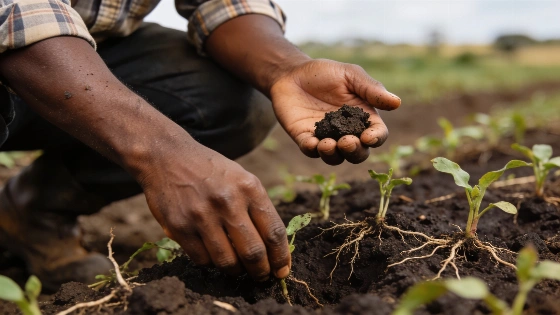
On November 19-20, 2026, the SADC Plant Nutrition Symposium is scheduled to bring growers, consultants, researchers and industry representatives to Stellenbosch. They will discuss how plant nutrition research can guide farm decisions.
The event announcement names the Protea Hotel Technopark as the venue and anticipates around 350 attendees. The program is intended for the region's varied agricultural systems, including dryland cropping and intensive irrigated production. Soils, crops, climates and constraints differ across those settings. An online livestream is also listed, though the event details could not be independently confirmed in the material reviewed.
The announced program spans soil sampling and analysis, nutrient placement, fertigation and precision agriculture, alongside coated, slow-release and controlled-release fertilisers. These are farm-input topics, not evidence about the contents or effectiveness of a consumer protein powder or meal replacement.
From soil analysis to nutrient application
Planned sessions cover soil sampling and analysis, fertiliser formulations, nutrient placement, fertigation, precision agriculture, biological inputs and regenerative farming. The event announcement also lists soil compaction, pre-season soil amelioration, nutrient corrections and salt management.
Choosing a fertiliser is only part of the job. Farmers also need to match inputs and application methods to their crops and soils. The program includes coated, slow-release and controlled-release fertilisers, micro-irrigation and drip systems, plus nitrogen-release technology. These terms refer to agricultural products and delivery methods. They say nothing about ingredient forms, serving sizes or evidence for claims on a shake's Supplement Facts panel.
Claims Check: A crop-nutrition program can explain how farmers manage nutrients in soil, but it cannot establish that a consumer supplement supports immunity, improves gut health or changes metabolism. For shoppers, those claims need to be assessed against the product's disclosed ingredients, amounts and applicable evidence; marketing language alone does not demonstrate an effect.
Managing nutrient balance across different farms
The program also covers trace elements and secondary nutrients, including magnesium, sulphur and calcium. It lists organic, semi-organic and enriched fertilisers, as well as crop rotation, cover crops, green manures, compost and mulches. Nutrient plans depend on crops and local conditions. A nutrient's presence in a product or program does not, on its own, show that it benefits every use.
The symposium says it aims to help farmers avoid both nutrient deficiencies and over-fertilisation. That matters to growers weighing input costs against the need to use soil and water resources well. The same habit of checking context can help nutrition-shake shoppers. A protein figure, sweetener, fibre ingredient or proprietary blend needs to be judged from the actual label, not a broad