
Only 4% of U.S. adults met the adequate intake level for fiber from 2013 to 2018. Recent estimates put average intake at about 16 grams a day. An earlier 2024 estimate found that 9.5% met recommendations, but the figures use different measures and should not be compared directly. There is no need to chase extreme "fibermaxxing" targets. Small additions to familiar meals can help.
The Nutrition Facts label's 28-gram Daily Value is a reference for comparing products, not a one-size-fits-all daily prescription. Check both grams of fiber per serving and serving size: a large scoop or bottle may contain more than one serving.
Make familiar meals do more
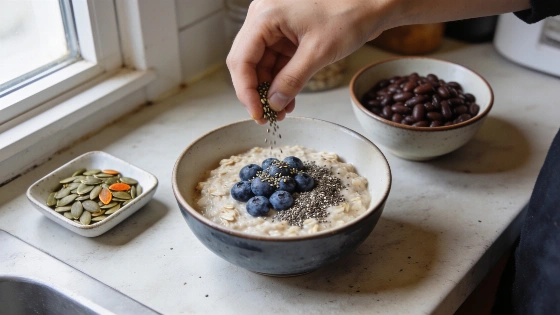
Half a cup of dry oats has about 4 grams of fiber. It also contains beta-glucan, a soluble fiber. A cup of wild blueberries can add around 6 grams. Frozen berries are convenient and can go straight onto oatmeal, cereal or yogurt. Fiber amounts vary by product and serving size, so check the package label when you can.
Claims Check: Oats contain beta-glucan, but total dietary fiber on a label is not the same as a disclosed beta-glucan dose. The FDA regulation for the soluble-fiber and coronary-heart-disease health claim sets specific criteria, including the amount consumed and the food's overall context; an ingredient mention alone does not establish that a serving meets them.
Legumes can add a lot to lunch or dinner. A cup of peas, lentils, beans or chickpeas may provide roughly 8 to 15.5 grams of fiber. The amount depends on the type and preparation. Add them to salads, pasta or grain bowls. You can also fold them into tuna or egg salad, or replace some of the meat in a dish with lentils. Increase fiber gradually and drink enough fluids. A sudden jump can cause gas or bloating.
Seeds offer another easy boost. An ounce of roasted pumpkin seeds has about 5 grams of fiber. An ounce of chia seeds provides nearly 10 grams. Stir chia into oatmeal, yogurt or cottage cheese, or sprinkle pumpkin seeds over a salad. Both seeds also provide iron. The amount absorbed from plant foods can differ from the amount absorbed from animal foods.
Use swaps and toppings to close the gap
Canned artichoke hearts are an easy option. A half-cup serving contains about 4 grams of fiber. Add chopped artichokes to pasta, salads or bowls, or serve them with beans for a more substantial side. Artichokes contain prebiotic fibers, but a "gut health" claim on a product does not show that it improves a specific digestive outcome.
Whole-grain swaps help, too. Whole-wheat bread can add roughly a gram of fiber per slice compared with white bread. Whole-wheat pasta is another option. The food-first approach works for snacks as well. Shake Nutrition's tart cherry dessert is another example of building a treat around food rather than a supplement.
If you use a nutrition shake or powdered meal replacement, check the fiber grams per serving, serving size and ingredient list. Inulin, chicory-root fiber, psyllium and acacia can add fiber. But an ingredient name does not tell you the dose unless the amount is disclosed. Check added sugars, calories and protein separately. A high-protein product is not automatically high in fiber. Nor does a "gut health" or "prebiotic" claim take the place of a clear label. With a proprietary blend, the label may list the blend's total weight but not the amount of each component.
Twenty-five grams is a useful starting point, not a universal target. Common practical guidance ranges from about 25 to 38 grams a day. Federal advice ties fiber to calorie intake. Track what you eat for a few days and compare it with Nutrition Facts labels. Try to include a fiber-containing food with each meal and snack. The NIDDK's fiber guidance also recommends foods such as whole grains, legumes, fruits and vegetables.
Keep it simple. Add chia to oatmeal, beans to a salad or whole-wheat pasta in place of regular pasta. These repeatable choices can raise fiber intake without supplements or a complete menu overhaul. If food choices do not reliably meet your needs, a fortified food or fiber supplement may be a convenient backup. Compare the amount per serving and check which type of fiber the label names. A steady food routine is more useful than trying to "max" one ingredient.