
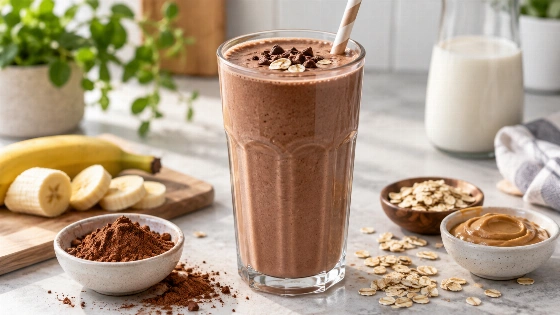
Chocolate Shakeology is a powdered nutrition shake rather than a traditional milkshake, so the ingredient list matters as much as the way it is blended. The current Chocolate Whey 0g Added Sugar version combines protein, cocoa, fiber, plant ingredients, probiotics, digestive enzymes, vitamins and minerals. It can be mixed with water and ice or turned into a thicker shake with milk and fruit.
For a basic chocolate shake, combine one serving of Chocolate Shakeology with 8 to 12 fluid ounces of cold water, dairy milk or unsweetened plant milk and about one cup of ice. Blend until smooth. For a creamier result, add half a banana. The official BODi preparation guidance also suggests fruit and a small amount of healthy fat such as nuts or seeds.
What ingredients are in Chocolate Shakeology?
The current Chocolate Whey 0g Added Sugar formula lists a protein blend built from whey protein isolate, pea protein, flax and quinoa, followed by cocoa powder. Its superfood blend also includes chlorella, chicory root, rose hips, astragalus, camu-camu, Bacillus coagulans, cordyceps, goji berry, blueberry, ashwagandha, chaga, maitake, reishi, spinach, acacia gum, schisandra, kale, matcha, maca, cinnamon, monk fruit and pomegranate. A digestive-enzyme blend is included as well. Other ingredients include natural flavors, xanthan gum, stevia, Himalayan pink salt and mixed tocopherols. Formulas can change, and Chocolate Vegan uses a different protein blend, so the bag label is the final reference.
Protein, cocoa and fiber form the base
Protein is one of the main differences between Shakeology and a simple cocoa smoothie. The current Chocolate Whey formula provides 17 grams of protein per serving, while the chocolate vegan version uses a plant-based blend and provides 16 grams. Cocoa powder supplies the chocolate flavor, while chicory root fiber and acacia gum contribute to fiber and texture. The 0g Added Sugar Chocolate Whey label lists 7 grams of dietary fiber and 1 gram of total sugar per serving.
Not every Chocolate Shakeology product has exactly the same formula. BODi sells whey and vegan versions, and original formulas may appear alongside the 0g Added Sugar line. Serving size, protein blend and supporting ingredients can differ. If an exact ingredient matters because of an allergy, sensitivity or dietary preference, check the ingredient panel on the specific bag.
How to make a healthier chocolate Shakeology shake
Start with water or unsweetened milk, then add fruit if you want more sweetness and body. Half a frozen banana makes the shake thicker and naturally sweeter. Berries add a sharper fruit flavor, while a small spoonful of peanut or almond butter creates a richer texture. Rolled oats can make the drink more substantial when it is being used alongside breakfast.
Liquid should go into the blender first, followed by the Shakeology powder and any soft ingredients. Add frozen fruit and ice last. Blend for 30 to 60 seconds and add a little more liquid if the mixture is too thick. Using frozen fruit instead of ice cream keeps the texture creamy without turning the shake into a dessert.
Is Chocolate Shakeology a meal replacement?
BODi describes Shakeology as a protein and superfood nutrition shake and notes that Shakeology on its own does not replace a complete meal. It can be part of breakfast or a balanced meal, or combined with fruit, nuts, seeds or other foods. A 140-calorie powder mixed only with water has a different nutritional role from the same powder blended with milk, banana, oats and nut butter.
If the drink is meant to be a snack, keeping the recipe simple may be enough. If it is meant to stand in for breakfast, adding whole-food ingredients can make the serving more substantial. Portion size still matters because nut butter, oats and milk all add energy as well as nutrients.
Chocolate Whey and Chocolate Vegan are not identical
The Chocolate Whey 0g Added Sugar version uses dairy-derived whey protein together with pea protein, while Chocolate Vegan relies on plant proteins such as pea, flax, rice and quinoa. Both use cocoa and include a broader superfood blend, but the nutrition facts and ingredient order are not identical. Anyone avoiding dairy should choose the vegan product and still read the package for current allergen information.
The practical rule is to treat Chocolate Shakeology as a formulated nutrition powder first and a recipe base second. Check the current label for the exact formula, use water or unsweetened milk as the starting liquid, and add fruit, oats or nut butter according to whether you want a light shake or a fuller meal.