
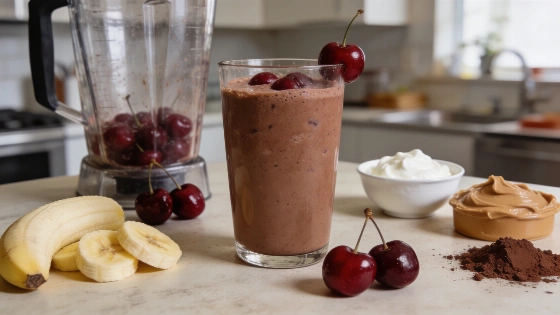
The recipe estimates 15 grams of protein and 49 grams of carbohydrates per serving. It takes about five minutes to make. Cocoa, peanut butter and fruit give it more flavor than a basic smoothie.
The recipe makes two servings, but you can halve it for one breakfast. The nutrition figures are estimates, not a guarantee for every version. Yogurt type and amount, soy milk formulation and serving size all affect what ends up in the glass.
The recipe reports 15 g protein and 49 g carbohydrates per serving. Treat those figures as estimates: check the Nutrition Facts panels on the specific soy milk and yogurt you use.
What goes into the shake
Blend unsweetened vanilla soy milk, sliced frozen banana, frozen cherries, strained Greek-style yogurt, peanut butter and cocoa powder until smooth. The result tastes like a chocolate shake, with fruity sweetness and a nutty note. Sweetened soy milk or yogurt can raise the added-sugar total. Check the package.
Soy milk and Greek yogurt provide most of the protein. Banana and cherries add carbohydrates and other nutrients. Unsweetened soy milk commonly provides about 7-8 g protein per cup. Greek yogurt often supplies roughly 15-20 g per 170-200 g serving, though brands and varieties differ. These figures help explain the ingredient choices, but they do not establish the exact amount in this recipe. Compare serving sizes and nutrition figures on the Nutrition Facts label.
The reported 15 g of protein is a moderate amount for breakfast, not a universal post-workout target. Want more? Check the recipe's yogurt amount and compare protein per serving on the yogurt and soy milk labels. An arbitrary scoop of protein powder changes the recipe's nutrition and taste. It is not necessary for everyone.
Claims Check: Calling a shake a convenient post-workout breakfast describes how someone might use it; it does not prove a special recovery effect. FDA food-label rules distinguish nutrient content and health claims, so evaluate any stronger benefit claim against the wording on the package and evidence for the specific ingredients.
Simple swaps for a one-person breakfast
Fresh banana can replace frozen banana. Add a few ice cubes if you want a colder drink. Almond milk is another option, but it typically contains substantially less protein than soy milk. Greek yogurt can help retain protein, though the amount depends on the portion and product. Powdered peanut butter works too. Check its label: protein, calories and added sugar vary by brand.
Peanut butter also features in Shake Nutrition's pantry-focused coverage. In this shake, it adds flavor and some protein alongside the yogurt and soy milk.
Cherries provide fruit and naturally occurring carbohydrates, so extra sweetener may not be needed. They also contain potassium and plant compounds. For a more precise nutrient comparison, consult the USDA FoodData Central database for reference values. The labels on the packaged ingredients are a better guide to the specific products in your blender.
The main advantage is convenience: familiar ingredients and a short preparation time. The balance of protein and carbohydrates is adjustable. Treat the reported nutrition as a starting estimate, check labels when comparing products, and choose milk or yogurt that suits your preferences and dietary needs. One breakfast option, not a substitute for variety across the rest of the day.