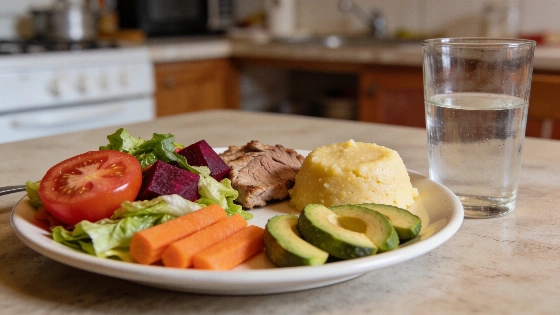
Dietitian Mikateko Maluleke suggests using one teaspoon of oil when preparing food. Avocado is another way to add unsaturated fat. The World Health Organization (WHO) advises replacing saturated and trans fats with unsaturated fats. Nuts contain them, as do seeds. Fish is another source.
The guidance comes from the KwaZulu-Natal Department of Health and Maluleke as South Africa observes Nutrition Week. WHO describes a healthy diet through four principles: adequacy and balance. Moderation is another. Diversity is the fourth. Its recommendations call for vegetables and fruit. Pulses and whole grains also feature. WHO advises limiting free sugars and salt. It also recommends cutting back on saturated and trans fats, along with highly processed foods.
Start with vegetables
Vegetables should cover half the plate, with a mix of colours. Maluleke gives tomatoes and lettuce as examples. She also points to carrot and beetroot, saying the plate should be colourful. WHO recommends at least 400 grams of fruit and vegetables a day for adults, about five portions of 80 grams. That benchmark applies across the day; it does not prescribe the same share for every meal.
Starch can come from pap or rice. Maluleke advises against large portions, though the guidance does not set a precise share of the plate for starch. WHO's broader advice is to include variety, with whole grains and pulses where available. A 2026 report by IOL during South Africa's National Nutrition Week also noted that meals based mainly on staple starches can provide energy without enough protein. Fibre may be lacking too, along with essential micronutrients.
Protein should fill the remaining quarter of the plate. Meat and fish are options. Eggs and dairy count too. Other choices include beans and lentils, as well as nuts and seeds. For meat, Maluleke recommends trimming visible fat.
Separate coverage of Malaika Arora's rice meal discussed its ingredients and portions in earlier meal coverage. An individual meal is different from general dietary guidance, which stresses variety and balance across the diet.
Water matters too
As temperatures rise, Maluleke urges people to drink enough water. Eight glasses, or approximately two litres, is a commonly used general guide. Fluid needs vary with activity and weather. Food intake and health also affect how much a person needs, so the figure is not a universal daily requirement for every adult.
Maluleke recommends water over sweetened drinks. She advises avoiding fizzy drinks and energy drinks, and says juice should be avoided too. WHO recommends keeping free sugars below 10% of daily energy intake. Reducing that to 5% or less offers additional benefits. Free sugars include those in sweetened drinks and fruit juice. WHO also advises adults to consume less than five grams of salt a day, counting salt added in cooking and salt already present in foods. Its healthy diet guidance and salt recommendations set out those daily benchmarks.