
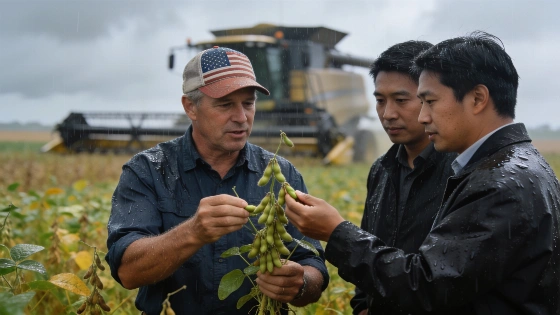
Rain fell on a South Dakota soybean field as visiting buyers from Southeast Asia watched farmers weigh a choice before harvest: wait for better conditions or bring in a wet crop. Jeff Thompson said U.S. growers often wait until the crop is ready. Farmers in Argentina and Brazil may harvest in wetter conditions to make room for another crop.
That detail matters to buyers comparing soybean costs across exporting countries. No new purchase agreement was announced. But the tour put overseas customers in direct contact with the people who grow and process the crop. U.S. soybean exports reached $16.46 billion and 38.10 million metric tons in 2025. Indonesia was among the major markets, according to USDA export data.
Commodity export totals measure trade in soybeans-not the protein, calories, serving size, or ingredient amounts in a finished nutrition shake or protein powder. Those details must be checked on the product's Nutrition Facts or Supplement Facts panel.
From farm fields to processing plants
Nearly a dozen soybean buyers traveled with Northern Soy Marketing through Minnesota and South Dakota. They visited the University of Minnesota's soybean research plots and lab, Patrick O'Leary's farm near Danvers, the Ag Processing Inc. crush plant in Dawson, Houdek, and Central Farmers Cooperative. At South Dakota State University, they took part in a discussion about poultry nutrition research. The group also visited Thompson's farm in Colton on Sept. 23.
For some visitors, walking into a soybean field was a first. Thompson said buyers who already purchase, sell, trade, or use soybeans to make feed often find the combine the highlight of a farm visit.
Claims Check: A soybean ingredient or a high protein number does not, by itself, establish that a product delivers a promised health effect. FDA guidance distinguishes structure/function claims from claims to diagnose, treat, cure, or prevent disease; shoppers should compare the claim with the disclosed ingredients and amounts rather than treating marketing language as proof.
Trade is more than a shipment
Deny Mulyono, a soybean buyer from Indonesia, said his company imports soybean meal for aquaculture feed and exports shrimp to the United States. He described the trade as mutual: "I mean, we buy your soybean meal and you buy our shrimp also. Thank you for that." Soybean meal for animal feed is not interchangeable with soy protein isolate or soy protein concentrate in a human nutrition product. The ingredient name and its place in the formulation matter.
Mulyono said the farm visit was his favorite part of the trip. "I believe every farmer has heart for what they are doing. We are struggling, I think this year alone, maybe since three years during the pandemic, and also now we're having problems ... we are seeing the fuel price is high and so on. But, we keep doing our part. I mean the farmers keep planting the soybeans, so we can have the soybean meal."
He said the tour also helped him understand how farmers grow and process soybeans. After the Midwest visits, the delegation continued to the West Coast to see export ports. Industry reporting for 2026 described Indonesia as a major U.S. soybean market. USDA data also recorded new private sales of 105,000 metric tons to unknown destinations for the 2025/2026 marketing year. Sales announcements and trade ties point to demand. They do not guarantee final shipment volumes or future purchases.
For shoppers comparing powders or ready-to-drink shakes, the same attention to detail applies. Soy protein isolate, soy flour, soybean oil, and soy lecithin are distinct ingredients. They should not be treated as equivalent protein sources. Check the ingredient list and the serving's protein, calories, added sugars, and serving size. Compare the price per serving, not just front-label phrases such as "clean" or "complete." A high protein-to-calorie ratio can describe a product. It does not show that the formula is a meal replacement or that a broad "gut health" or "immune support" claim is supported by the disclosed formulation.
For growers who rely on world markets, the trip had a clear purpose: buyers saw the crop, heard about harvest conditions, and visited facilities that process soybeans. Future purchases are not guaranteed. Face-to-face visits give both sides a firmer basis for weighing costs and maintaining trade relationships. For consumers, the practical point is just as clear. Trade figures show where soybeans move. Only the finished product label tells you what is in a scoop or bottle.