
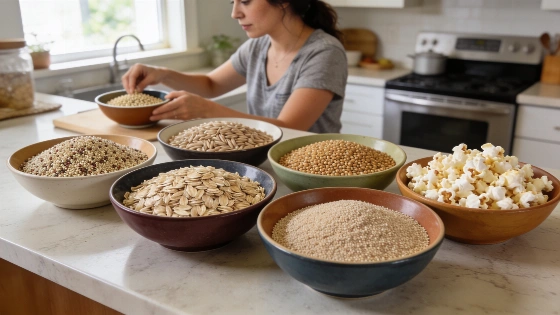
Brown rice gets a lot of attention for its fiber, but it's far from the only option-and not even the best. According to USDA FoodData Central, white rice has just 0.4-1.8 grams of fiber per 100 grams, and brown rice isn't much higher. If you always reach for brown rice, you're missing out on other grains that can boost both your nutrition and the flavor of your meals.
Popcorn, when air-popped and unsweetened, delivers about 7.1 grams of fiber per 100 grams-making it a surprisingly dense whole grain snack compared to rice or even some traditional cereals.
Fiber powerhouses beyond brown rice
Sorghum stands out for its high fiber and mild, slightly sweet taste. It's gluten-free and soaks up flavors well, making it a good base for salads, stews, or grain bowls. Barley is another strong choice, with nearly 6 grams of fiber per cup and a mix of soluble and insoluble fiber that can help lower cholesterol and steady blood sugar. Quinoa, often praised for its protein, also has 5 grams of fiber per cup and is one of the few plant foods that's a complete protein.
Oatmeal is well known for its fiber, with about 2 grams per half-cup cooked, and is rich in beta-glucan, a soluble fiber linked to lower cholesterol. Amaranth offers about 6.5 grams of fiber per half-cup dry, plus protein, iron, and a nutty flavor that works in porridge, soups, or baking. And don't overlook popcorn: air-popped and plain, it's a whole grain snack with about 2 grams of fiber per 28-gram serving, giving you crunch and satisfaction without extra calories.
Claims Check: While many brands market their shakes and blends as 'gut health' or 'fiber-rich,' only products that disclose actual fiber content per serving and specify the fiber source (such as inulin, psyllium, or oat beta-glucan) can be meaningfully compared. The FDA requires that Nutrition Facts panels accurately reflect dietary fiber content, and vague proprietary blends do not guarantee clinically relevant doses.
Sticking with brown rice out of habit means missing out. The evidence is clear: adding a mix of whole grains is a simple, affordable way to improve your fiber intake and overall nutrition. These six grains actually deliver on their promises. It's worth making space for them in your pantry-and your meals.