
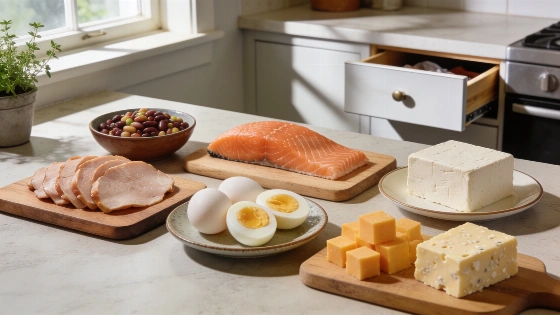
Serotonin often comes up in conversations about mood, depression, and anxiety, but it's more than just a buzzword. It's a real neurotransmitter that affects how we feel, think, and even digest food. While medications can target serotonin, dietitians are increasingly pointing to what's on your plate as a way to support your body's own serotonin production.
Your body needs tryptophan-an amino acid found in both animal and plant proteins-to make serotonin. But only a small portion of the tryptophan you eat actually turns into serotonin. Most of it is used elsewhere in the body, including for cellular energy production. This is worth keeping in mind when you see claims about foods or supplements that "boost" serotonin.
Eggs, salmon, tofu, turkey, and dairy are consistently listed as tryptophan sources on Supplement Facts panels, but none are direct sources of serotonin itself.
Shake Nutrition Editorial Desk
If you're looking at protein powders or meal replacements, check the label for details on protein sources and amino acid content. Whey, casein, pea, and soy proteins all contain tryptophan, but the amount per serving can vary a lot. Some plant-based blends mix pea, pumpkin seed, and brown rice to cover more amino acids, but unless the label lists tryptophan per serving, it's hard to compare products on that basis.
Among whole foods, turkey has about 244 mg of tryptophan per serving. Salmon is close behind at 242 mg, and tofu has 200 mg. Eggs (84 mg each), cheddar cheese (233 mg), and beans (especially white beans and lentils) are also good sources. These are everyday foods, not specialty items. The real trick is working them into meals that suit your tastes and needs.
It's important to know that eating more tryptophan-rich foods doesn't guarantee a big jump in brain serotonin. Tryptophan has to compete with other amino acids to cross into the brain, and factors like your overall diet and metabolism also play a role. That's why nutrition experts recommend a balanced, food-first approach instead of chasing single "mood-boosting" ingredients.
Claims Check: While many brands market protein shakes and superfood blends as supporting mood or serotonin, FDA regulations prohibit disease treatment claims unless substantiated by clinical evidence. Most products list tryptophan as part of the amino acid profile, but do not-and cannot-guarantee a direct effect on serotonin levels in the brain.
FDA / Clinical Nutrition Review
Other factors matter, too. Regular exercise, sunlight, and a diet high in fiber and probiotics all help regulate serotonin. Since much of the body's serotonin is made in the gut, digestive health is tied to mood. Some meal shakes now add prebiotic fibers and probiotic strains, but it's worth checking the label for details on which strains and how much you're actually getting.
Still, food and lifestyle changes aren't a substitute for medical care. If you're struggling with mood or mental health, dietitians recommend talking to a doctor for personalized advice. Nutrition can help, but it's not a cure-all.
In the end, supporting serotonin isn't about miracle foods or supplements. It's about regularly choosing nutrient-rich proteins-like turkey, salmon, eggs, tofu, cheese, and beans-while staying active and looking after your gut. For protein powders or shakes, look for full amino acid breakdowns, third-party testing (such as NSF Certified for Sport), and clear serving sizes. That's the kind of practical advice that actually works day to day.