
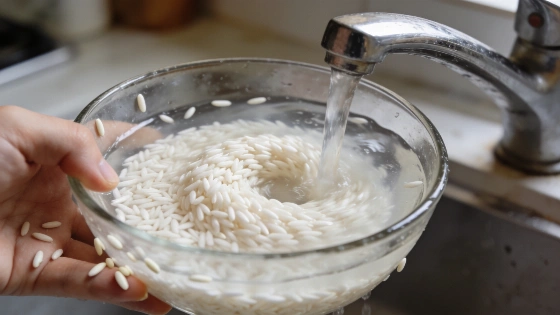
A risotto pan needs the starch that a rinse would wash away. That starch helps give the dish its creamy texture. For fluffy, separate grains, rinsing can help instead. Texture comes first.
Paella methods vary, but many cooks leave the rice unwashed. The crisp socarrat forms as rice at the bottom of the pan browns. Rinsing alone does not create it.
A Nutrition Facts panel describes nutrients in a serving, but it does not tell you how much loose surface starch a rinse will remove. The effect of rinsing is chiefly a texture choice.
What rinsing changes
During processing and packaging, rice grains rub against one another. That can leave a fine coating of starchy residue. White rice is milled to remove its husk, germ and bran, which exposes a softer interior. Rinsing can also wash away dust or particles picked up during handling.
Removing some surface starch usually means less clumping. That can help with pilafs, salads and many steamed-rice dishes, where distinct grains are the goal. A method that helps one dish may work against another.
There is no need to rinse until every trace of starch is gone. Use a fine-mesh sieve and cold water until the water is nearly clear. That often takes about 1-2 minutes for white rice and around 30 seconds for brown rice. Stop there. The aim is to remove excess surface starch, not make the water perfectly transparent.
Claims Check: Rinsing is not a dependable way to reduce arsenic in rice. FDA guidance describes rinsing as having little effect on arsenic levels; cooking rice in excess water and draining it can reduce inorganic arsenic, but may also remove some nutrients.
Match the rinse to the meal
Some cooks swish rice in a bowl, then pour the water through a sieve. This adds agitation while lowering the risk of losing grains. Stop when the water is nearly clear. Washing too hard or for too long can affect the texture and may remove some water-soluble nutrients.
The best choice often depends on how you plan to use a food. The same idea appears in this produce comparison, where the right option depends on the decision at hand.
Rice cooker water lines are generally calibrated for rinsed rice. For most home cooks, the difference is small, whether rice is made in a cooker or on the stovetop. Follow the appliance instructions, then adjust if the rice turns out too wet or dry again and again.
Rinsing is not an arsenic fix
Rice can absorb arsenic from the environment where it grows. Brown rice may contain more inorganic arsenic than white rice because its bran and germ remain intact. Rinsing has little effect on arsenic in cooked rice. Cooking rice in excess water, like pasta, and draining it can reduce inorganic arsenic. That method may also wash away water-soluble vitamins such as folate, niacin and thiamine.
Brown rice generally provides more fiber than white rice, though nutrient amounts vary by variety and serving. For a like-for-like nutrient comparison, USDA FoodData Central provides standardized food composition data. Check whether entries refer to cooked or uncooked rice before comparing values.
Choose the rinse for the result you want. Rinse briefly when loose, clearly defined grains matter. For risotto's creamy texture, leave the starch in place. Arsenic reduction is a separate food-preparation question, not a benefit to assume from washing rice.