
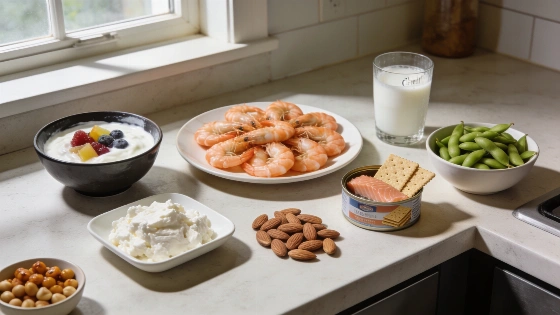
Eggs have a reputation as the go-to protein snack, but they're not the only option-and not even the highest in protein per serving. Plenty of everyday foods offer more protein than a large egg's six grams, and they're just as easy to keep on hand.
A 6-ounce (170 g) serving of plain Greek yogurt typically provides 15-15.5 g protein, while a large egg contains about 6 g. This makes Greek yogurt one of the most protein-dense dairy snacks per calorie.
Seafood and dairy with even more protein
Shrimp packs 20 grams of protein in a 3-ounce serving. It's not just for dinner-chilled shrimp with cocktail sauce or wrapped in lettuce makes a filling snack and helps you meet seafood recommendations. Canned fish like salmon, tuna, and sardines are also strong choices. A small can of salmon (75 grams) has 19 grams of protein, plus calcium and vitamin D if you eat the soft bones. Pair canned fish with whole-grain crackers or fresh vegetables for a balanced snack.
Cottage cheese is back in style, partly thanks to social media. A half-cup serving has 12 grams of protein and can be eaten plain, with fruit, or whipped into a dip. Low- and no-salt versions are easy to find if you're watching sodium.
Plant-based and nut options
Claims Check: While many brands market snacks as "high-protein" or "complete protein," only those with all nine essential amino acids in sufficient amounts meet the FDA definition of a complete protein. Animal-based snacks like shrimp, Greek yogurt, and cottage cheese qualify, while most plant-based options require careful pairing to achieve a full amino acid profile.
Almonds are one of the highest-protein nuts, with 9 grams in a 1.5-ounce handful (about 35 almonds). They also provide fiber, vitamin E, and calcium. Almond butter is another option-two tablespoons have nearly 7 grams of protein, especially when spread on whole-grain bread.
Milk kefir rounds out the list, with 9 grams of protein per cup and probiotics for gut health. Its tangy flavor works on its own or as a smoothie base, and it's an easy way to add both protein and calcium.
Before you swap your snack
Eggs are still a nutritious, versatile choice, but these alternatives offer more protein per serving and can help you mix up your snacks. Most animal-based options here-shrimp, canned fish, Greek yogurt, cottage cheese, and kefir-are complete proteins, meaning they contain all nine essential amino acids. Plant-based picks like edamame, chickpeas, and almonds are high in protein but may need to be paired with other foods to provide the full amino acid profile, especially for vegetarians and vegans.
If you want to stay full between meals or support muscle building, you don't have to stick with eggs. With so many high-protein snacks available, it's easy to meet your nutrition goals and keep your routine interesting. Mixing up your protein sources supports better nutrition and keeps snacking from getting boring.