
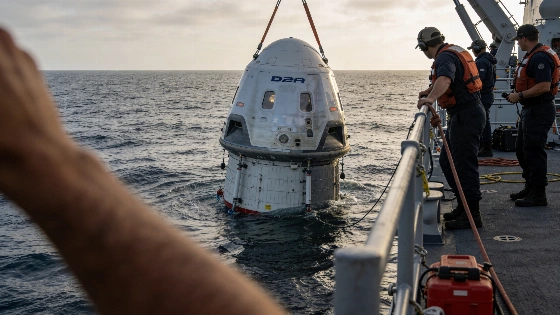
At 6:05 a.m. EDT on October 7, Dragon closed its hatch. It undocked from the ISS's Harmony module at 8:05 a.m.
The return trip took about 27 hours. NASA had scheduled the deorbit burn for 10:46 a.m. EDT on October 8. During descent, drogue parachutes were expected to deploy at roughly 18,000 feet and 350 miles per hour. Main parachutes were due to open at about 6,000 feet and 120 miles per hour.
Four astronauts are back on Earth after 237 days aboard the International Space Station. Their SpaceX Dragon splashed down in the Pacific off Los Angeles at 11:34 a.m. EDT on October 8. Recovery teams began retrieving the crew and spacecraft.
The mission included research on nutrition during spaceflight. Other projects examined human health and technology, including how to sustain a crew in orbit. The mission update does not report results, tested products, ingredient amounts, or dietary recommendations.
Research in orbit is not a product endorsement
The crew included Jessica Meir and Jack Hathaway. Sophie Adenot and Andrey Fedyaev were also aboard. Their studies covered stem cell production and on-demand IV fluid generation. Researchers also examined blood flow in microgravity and nutrition during spaceflight. Another project looked at whether pneumonia-causing bacteria may play a role in long-term heart damage. NASA has not provided findings from these projects in the mission update.
For shoppers, a study topic is not evidence that a particular protein powder or meal replacement improves health. Check the Nutrition Facts or Supplement Facts panel. Start with serving size and calories, then look at protein grams. Added sugars and ingredient amounts also matter. For protein powders, the protein source and protein per serving tell shoppers more than package phrases such as "clean energy" or "gut health."
What the label can and cannot show
A label helps shoppers compare disclosed nutrition, but it cannot fill in missing research results. Check serving size before comparing protein or calories. Then identify whether the product is a powdered meal replacement, a ready-to-drink shake, or a protein supplement. Those categories may serve different purposes. A proprietary blend can list a combined weight without showing each ingredient's individual amount, making it harder to assess what the formula provides.
A "high protein" or "superfood" message does not establish a complete meal or a clinical benefit. People evaluating supplements can consult NIH supplement guidance. They should also check the product label for serving size and allergens, then review sweeteners and disclosed ingredient quantities. NASA has announced a post-return briefing to discuss the mission and research conducted aboard the station.
Return and spacewalk milestones
The crew completed four spacewalks during the expedition. Meir performed all four, bringing her career total to seven. She ranks third among NASA women astronauts by career spacewalk count, behind Peggy Whitson. Sunita Williams also ranks ahead of Meir. Adenot became the first French woman to perform a spacewalk.
Meir and Fedyaev had each flown in space before. Hathaway and Adenot were first-time space travelers.