
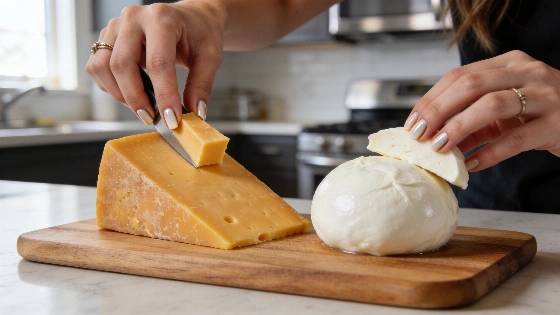
One ounce of cheese can pack a nutritional punch, but not all cheeses are created equal. For anyone reaching for a quick snack or building a balanced meal, the choice between cheddar and mozzarella is more than a matter of taste-it's a question of protein, calcium, fat, and how your body handles dairy.
Cheddar and mozzarella both deliver about 6 to 8 grams of protein per ounce, making them reliable sources for muscle maintenance and satiety. Registered dietitian nutritionist Kendra Haire points out that this protein is especially important for adults over 50, who need to preserve lean mass as they age. Calcium is another shared strength: each cheese offers roughly 200 milligrams per ounce, supporting bone health at every stage of life. For women over 50, whose calcium needs jump to 1,200 milligrams daily as estrogen declines, these cheeses can help fill the gap.
But the similarities end when you look at fat and sodium. Cheddar, especially when aged, is denser in both fat and calories-9 grams of fat and 115 calories per ounce, with most of that fat being saturated. Mozzarella, particularly part-skim varieties, comes in lighter at 6 grams of fat and 80 to 90 calories per ounce. Fresh mozzarella also tends to have less sodium, thanks to its higher water content, while cheddar's aging process concentrates both nutrients and salt.
Flavor is another dividing line. Cheddar's sharpness intensifies with age, making it a bold addition to sandwiches and boards, while mozzarella's mild, creamy profile melts seamlessly into cooked dishes. That versatility is why mozzarella dominates pizza and string cheese, while cheddar holds court on burgers and snack plates.
For those watching cholesterol or saturated fat, moderation is non-negotiable. Haire recommends keeping saturated fat under 10% of total daily calories-about 22 grams for a 2,000-calorie diet. With a single ounce of cheese delivering up to 6 grams of saturated fat, it's easy to overshoot if you're piling on slices or loading up a casserole. The fat in both cheeses is almost entirely saturated, a fact that matters for anyone managing heart health.
Lactose tolerance is another factor that can sway your choice. Aged cheddar contains less lactose, making it easier on sensitive stomachs, while fresh mozzarella's higher lactose content can trigger discomfort for some. For those with lactose intolerance, cheddar may be the safer bet.
Beyond protein and calcium, both cheeses offer phosphorus and vitamin K2, nutrients that further support bone strength. Their combination of protein and fat also helps keep you full, stabilizing blood sugar and potentially aiding weight management-if you stick to realistic portions. Haire reminds clients that a true serving is just one ounce, about the size of four stacked dice or the top of an adult thumb to the joint. It's a lot less than most people realize, especially when faced with a loaded charcuterie board.
In the end, cheddar and mozzarella are both solid choices for a satisfying, nutrient-dense snack or meal addition. The real difference comes down to your personal nutrition goals, taste preferences, and how your body handles dairy. If you want a lower-fat option, part-skim mozzarella edges ahead. If you crave bold flavor and need less lactose, aged cheddar wins. But neither cheese deserves a villain label-just a reality check on portion size. For most people, the smartest move is to enjoy whichever cheese you love, but keep it moderate and mindful. That's the only way cheese stays a friend to your health, not a hidden saboteur.