
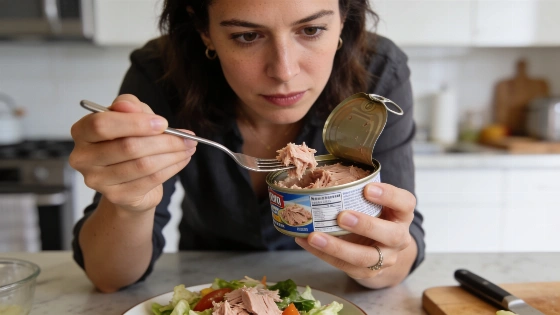
Mercury poisoning is not a theoretical risk for canned tuna lovers-it's a real consequence of making this pantry staple your daily protein fix. Dietitian Sydney Lappe, MS, RDN, doesn't mince words: "Eating canned tuna every day can expose you to more mercury than is recommended, so I wouldn't make it an everyday protein source."
For anyone who relies on canned tuna for its 24 grams of lean protein per 85-gram serving, the appeal is obvious. It's affordable, shelf-stable, and packed with omega-3s, selenium, and vitamin B12. But the very nature of tuna as a predatory fish means it accumulates methylmercury-a neurotoxin that lingers in the body and can build up with frequent consumption.
Methylmercury's effects are not subtle. At high enough levels, it can damage the brain and nervous system, with symptoms ranging from loss of peripheral vision and tingling in the extremities to impaired coordination, speech, and muscle weakness. The risk is especially acute for pregnant women and children, whose developing brains are most vulnerable to mercury's toxic effects.
Not all tuna is created equal when it comes to mercury. Canned light tuna, usually made from skipjack, contains significantly less mercury than white or albacore tuna-about three times less on average. Even so, mercury levels can vary based on where the fish was caught, with research pointing to higher contamination in some regions like the North Pacific Ocean and Gulf of Mexico.
The FDA's guidance is clear: canned light tuna is a "Best Choice" and can be safely eaten two to three times per week. Albacore, on the other hand, is a "Good Choice" but should be limited to one four-ounce serving per week. Lappe herself still eats tuna, but she pays close attention to the type and frequency, echoing the need for moderation rather than avoidance.
For shoppers and meal planners, the takeaway is straightforward. Tuna can absolutely be part of a healthy, high-protein diet, but it's not a free pass for daily consumption. Prioritize canned light tuna over albacore, keep servings within FDA recommendations, and rotate in other protein sources to minimize risk. The convenience of canned tuna is undeniable, but ignoring mercury limits is a gamble with your long-term health that simply isn't worth taking.