
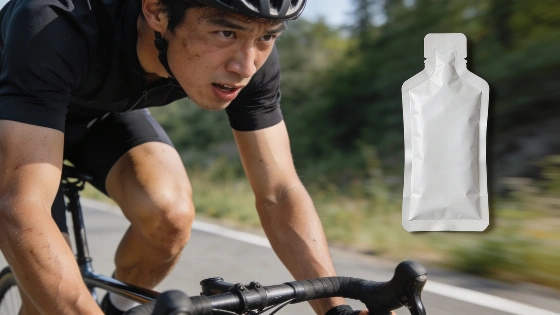
In a randomized crossover study, 11 trained cyclists rode for three hours before a 12-minute time trial. They produced more power after taking a sodium bicarbonate and carbohydrate gel than after taking carbohydrates alone. The peer-reviewed study compared conditions with 80 grams of carbohydrate per hour, with or without bicarbonate. Its record is listed in PubMed.
Participants rode at a moderate pace, then completed power-profile tests and a 12-minute time trial. The protocol included a high-carbohydrate diet and a carbohydrate-rich breakfast. The result concerns hard efforts late in a ride after planned fueling. It does not address fasted workouts, protein shakes, or fresh performance at the start of exercise.
In the active condition, the hourly carbohydrate intake was paired with a gel containing 18 g sodium bicarbonate and 2 g potassium bicarbonate. Those are study-protocol amounts, not a general serving recommendation.
What the performance result shows
During the 12-minute time trial, cyclists in the bicarbonate condition produced 12 watts more than those who received carbohydrate alone. The authors reported statistical significance, with p = 0.01, and a large effect size, g = 1.07. The test came after three hours of riding. Additional power-profile tests also measured performance while the cyclists were fatigued.
Sodium bicarbonate has been studied as an ergogenic aid for some high-intensity efforts, usually those lasting about one to 60 minutes. This trial tested a different approach: cyclists took bicarbonate during prolonged exercise in a gel, rather than only before an event. Researchers also monitored blood samples during the protocol. That does not mean every athlete will have the same response or performance result.
Claims Check: This trial supports a specific performance finding in 11 trained cyclists under a tightly controlled protocol; it does not prove that any product marketed for energy, endurance, or recovery will produce the same result. Check the label for the actual bicarbonate amounts and carbohydrate per serving, and treat a tested dose as study information-not individualized guidance.
Read the formulation, not just the claim
When comparing sports gels or drink mixes, check the carbohydrate grams per serving and the listed amount of sodium or other active ingredients. Also check how many servings would match a study protocol. In this trial, both conditions included 80 grams of carbohydrate per hour. The active condition also included specified amounts of bicarbonate. A product that lists only the weight of a proprietary blend, without amounts for each ingredient, cannot be reliably matched to the trial.
The result does not show that bicarbonate belongs in a meal-replacement shake or protein powder. Those products have different formulation goals. For protein powder, check the protein grams, source, serving size, calories, sugars, and allergens. For a performance gel, check the carbohydrate and electrolyte amounts, serving directions, and relevant cautions. Claims such as "clean energy" or "endurance support" do not replace those details. The FDA's guidance on dietary supplement claims provides regulatory context. A product claim alone does not establish clinical efficacy.
Participants reported mild gastrointestinal discomfort. This small study cannot show how well the formulation would be tolerated across a broader population. Sodium bicarbonate can cause gastrointestinal symptoms. The amounts tested here are not a recommendation to repeat the protocol without qualified guidance.
Dr. Julien B. Louis, Reader in Nutrition and Exercise Physiology and project supervisor, described the gel format as a potentially practical strategy for endurance athletes. The result is promising under a specific set of conditions. It does not guarantee a performance gain. This research looks at fueling during exercise, unlike research on shared eating routines, which focuses on everyday household habits.